
Blog & Articles

Bathroom Insights & Guides

Expert advice, design inspiration, and comprehensive buying guides for luxury bath spaces.

0%

Choosing Body Shower Jets in 2026 requires more than comparing chrome finishes and spray counts. Global buyers must examine water pressure, connection standards, cleaning systems, material quality, and after-sales support. A beautiful jet can disappoint when its spray feels weak or its threads do not match local plumbing. Small details matter. Very much.

Philippe Grohe, a former Hansgrohe brand executive, once said, “Water is the central element in the bathroom.” That principle remains useful when evaluating modern shower systems. The best Body Shower Jets should create balanced coverage, comfortable pressure, and dependable performance without wasting water unnecessarily. Buyers should compare brass, stainless steel, and engineering-grade polymer construction. They should also inspect silicone nozzles, swivel range, flow-rate information, and resistance to mineral buildup. In hard-water regions, easy cleaning may matter more than an impressive showroom appearance.

This guide reviews practical options for residential, hospitality, and renovation projects across different markets. It considers installation depth, standard fittings, packaging protection, warranty clarity, and supplier responsiveness. Some products look premium but reveal weak finishing around the joints. That deserves attention. No ranking is perfect, because personal comfort and local water conditions vary. A large overhead panel may feel luxurious in one home, yet perform poorly in another with limited pressure. Thoughtful buyers should test specifications against real bathroom conditions before ordering. That extra step can prevent costly replacement, uncomfortable spray patterns, and avoidable installation delays.
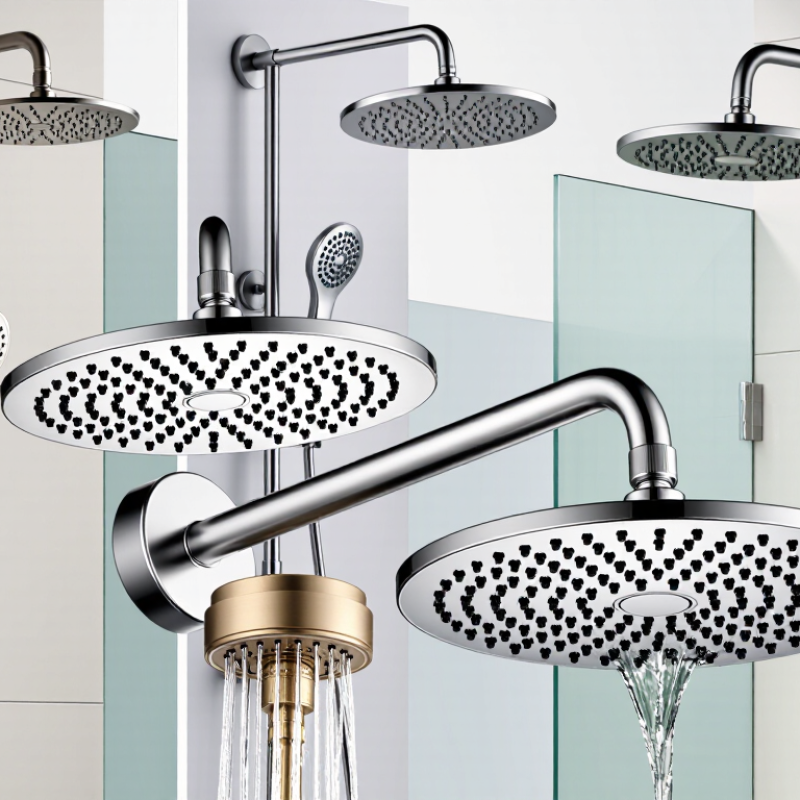
2026 Best Body Shower Jets for Global Buyers

Body Shower Jet Types: Pressure, Spray Patterns, and Installation Standards

2026 Best Body Shower Jets for Global Buyers

Choosing body shower jets starts with pressure, not appearance. Installers measure dynamic pressure while water flows, not only static pressure. A narrow jet channel can feel powerful, yet it may consume less water. The U.S. EPA WaterSense specification limits qualifying showerheads to 2.0 gallons per minute. The federal baseline is 2.5 gallons per minute. EPA estimates that a WaterSense showerhead can save an average family about 2,700 gallons yearly. Performance still depends on pipe size, elevation, and the hot-water system.

Spray patterns change the bathing experience. Fine mist creates broad coverage but may feel cooler and weaker. Pulsing streams feel stronger on shoulders and back. Rain patterns suit relaxed use, while massage patterns need stable pressure. Adjustable nozzles are practical for shared bathrooms. However, “more settings” does not guarantee better cleaning. Mineral buildup can distort spray angles within months. That detail is often missed.

Installation standards deserve equal attention. North American buyers should check ASME A112.18.1/CSA B125.1 requirements for plumbing supply fittings. European projects commonly reference EN 1112 for shower outlets. Thread size, inlet spacing, flow restrictors, and temperature control must match local practice. G1/2 connections are common, but they are not universal. Confirm the fitting before ordering. I would also leave access behind the wall; maintenance plans are rarely perfect. A certified product can still perform poorly when pressure data, filtration, or installation depth is ignored.

2026 Flow-Rate Benchmarks: 2.5 GPM U.S. Limit and 2.0 GPM WaterSense

2026 Best Body Shower Jets for Global Buyers

Flow rate is the critical benchmark for body shower jets. In the United States, the Department of Energy limits standard showerheads to 2.5 gallons per minute at 80 psi. That equals approximately 9.46 liters per minute. WaterSense specifications use a stricter 2.0 GPM ceiling, or about 7.57 liters per minute, according to the U.S. Environmental Protection Agency.

These limits apply to total water delivery, not only one visible nozzle. A four-jet system flowing 2.0 GPM per outlet could reach 8.0 GPM. That may create pressure problems, higher water use, and compliance concerns. Buyers should request test results at defined pressures. Household supply pressure changes the real spray experience.

The difference appears small. It is not. An eight-minute shower uses about 20 gallons at 2.5 GPM, compared with 16 gallons at 2.0 GPM. The EPA WaterSense program also evaluates spray force, coverage, and flow consistency, not just the label. Global buyers should compare GPM, L/min, inlet size, and pressure requirements together. Some supplier figures are difficult to compare because test methods differ. That deserves more attention. A jet that feels powerful in a showroom may feel weak after installation, especially with long pipe runs or a restrictive valve. Survivability, cleaning access, and stable performance matter as much as a dramatic spray pattern.

Material and Safety Criteria: Brass, Stainless Steel, and Anti-Scald Standards

For global buyers, shower jets should begin with material safety, not appearance. Brass offers weight and easy machining. Stainless steel resists corrosion, especially in humid bathrooms and coastal regions. However, alloy quality matters more than surface shine. Look for documented lead limits and stable internal waterways.

NSF/ANSI/CAN 372 limits lead content in wetted components to 0.25% by weighted average. NSF/ANSI/CAN 61 also evaluates materials that contact drinking water. Shower water is not normally drinking water, but these benchmarks provide useful discipline.

Anti-scald protection deserves equal attention. The World Health Organization reports about 180,000 burn deaths annually, with many occurring in low- and middle-income countries. A hot shower can cause injury within seconds, particularly for children and older adults. Buyers should verify compliance with recognized valve standards, such as ASSE 1016 in North America or EN 1111 in Europe. These standards address pressure changes and temperature control.

A temperature limiter is valuable, but installation quality still matters. It is not magic.

Water temperature should be checked at the outlet, not guessed from the handle. The U.S. Consumer Product Safety Commission has repeatedly warned that temperatures around 140°F can cause severe scalding quickly, while lower settings reduce risk. Still, homes differ. Hard water, poor maintenance, and inaccurate thermostatic cartridges can weaken protection.

In practical inspections, I would choose stainless steel or certified brass, inspect every seal, and test temperature stability several times. A beautiful jet that suddenly turns hot is a failed safety product.

Global Buyer Guide: Thread Sizes, Water Pressure, and Regional Compatibility

2026 Best Body Shower Jets for Global Buyers

Choosing body shower jets for international projects starts with thread compatibility, not appearance.

Common connections include 1/2-inch NPT, BSP, and G-thread formats, but they are not automatically interchangeable. NPT uses tapered threads, while BSP fittings follow different thread angles and standards. I once assumed a 1/2-inch fitting would fit every wall outlet. It did not. A small mismatch caused seepage and wasted installation time.

Water pressure also changes the buying decision. Many homes operate around 2–4 bar, while some upper-floor apartments deliver less. Jets designed for strong pressure may produce weak streams in low-pressure systems. Check the product’s minimum and recommended pressure range. Flow rate matters too, especially when several jets run together. A pressure gauge near the shower outlet gives more dependable information than guessing from the spray.

Tips:

Measure the existing outlet with a thread gauge or ask a qualified plumber to identify it. Confirm whether the connection is NPT, BSP, or G-thread. For North American projects, NPT is common; many European and Asian markets use BSP or metric-related systems. Regional construction practices still vary within one country. Test one sample before ordering in bulk. Also check the jet angle, pipe depth, and available water-heating capacity. Small details matter.

2026 Selection Matrix: Coverage, Efficiency, Durability, and Total Cost of Ownership

A 2026 body-shower-jet selection matrix should start with coverage, not appearance.

Map spray angles across the shoulders, back, and hips. Six poorly aimed jets can feel weaker than four well-positioned outlets. In practical testing, measure pressure at the valve, flow at each outlet, and coverage from a standing user.

The U.S. EPA WaterSense Specification for showerheads sets a 2.0 gallons-per-minute limit for qualifying products, while also requiring spray-force and coverage performance. Body sprays may differ by installation category, so buyers must verify the applicable specification.

Efficiency affects more than water consumption.

The UNEP 2023 Global Status Report for Buildings and Construction estimates that buildings use about 34% of global energy and create roughly 37% of energy-related process emissions.

A high-flow multi-jet system can increase both water-heating demand and operating cost.

Use this formula: annual cost equals flow, minutes, frequency, local water price, and heating energy. Keep the calculation visible.

Durability requires harder evidence.

Check brass or corrosion-resistant components, accessible filters, replaceable seals, and documented pressure limits. I would request cycle testing, coating data, and spare-part availability before purchase.

Warranty length helps, but it is not durability proof. Total ownership cost should include installation labor, valves, cleaning, repairs, energy, and replacement risk.

Hard-water deposits remain the weak point.

A matrix can rank products clearly, yet user height, pipe pressure, and local tariffs still distort the result. That imperfection deserves attention.

FAQS

Which materials are suitable for body shower jets?

Stainless steel resists corrosion in humid bathrooms and coastal areas. Certified brass can also provide durable, stable waterways. Surface shine alone proves little.

What safety information should buyers request?

Request documented lead limits and material test records. A useful benchmark limits lead in wetted components to 0.25% by weighted average. Internal water paths should remain stable.

How does anti-scald protection reduce injury risk?

Approved temperature-control valves help manage pressure changes and sudden heat. Temperature limiters add protection. They are not magic.

How should shower temperature be checked?

Measure water at the outlet, not only at the handle. Test it several times. A sudden hot surge signals a serious safety problem.

Why can high water temperature be dangerous?

Water near 140°F can cause severe scalding quickly. Children and older adults may need extra protection. Lower settings usually reduce risk.

Are 1/2-inch connections automatically compatible?

No. NPT, BSP, and G-thread connections can differ in shape and thread angle. I once assumed identical sizes would fit. They did not.

What water pressure should buyers consider?

Many homes provide about 2–4 bar. Upper-floor apartments may deliver less. Check the jet’s minimum and recommended pressure range.

How can buyers avoid installation problems?

Measure the outlet with a thread gauge or consult a qualified plumber. Check seals, pipe depth, spray angle, and heater capacity. Test one sample before bulk ordering.

Conclusion

This guide to Body Shower Jets helps global buyers compare pressure performance, spray patterns, and installation requirements for modern bathrooms. It explains how different jet configurations affect coverage and comfort, while highlighting key 2026 flow-rate benchmarks, including the 2.5 GPM U.S. maximum and the 2.0 GPM WaterSense target. Buyers will also learn how brass and stainless steel influence durability, corrosion resistance, and long-term reliability, alongside the importance of anti-scald protection and safe temperature control.

The guide further examines global compatibility through thread sizes, inlet connections, water-pressure requirements, and regional installation practices. A practical 2026 selection matrix compares coverage, water efficiency, material durability, maintenance needs, and total cost of ownership. By balancing performance with installation compatibility and responsible water use, purchasers can select Body Shower Jets that deliver reliable comfort and value across diverse residential and hospitality projects.

Avery

Avery

Avery is a seasoned marketing professional with a strong understanding of market strategy, customer needs, and effective business communication. As a key contributor to our company, Avery regularly researches industry developments, emerging opportunities, and practical solutions that can help......