


Blog & Articles
Bathroom Insights & Guides
Expert advice, design inspiration, and comprehensive buying guides for luxury bath spaces.
2026 Best Designer Art Wash Basin for Global Buyers
Table of Contents
- Definition and Key Features of Designer Art Wash Basins
- Major Styles and Materials Available in 2026
- How to Evaluate Quality, Functionality, and Craftsmanship
- Global Buyer Guide to Sizes, Standards, and Compatibility
- Sourcing, Shipping, Installation, and Long-Term Maintenance
- FAQS
- Conclusion
- Related Posts
The 2026 bathroom market is moving beyond basic utility. Buyers now expect sculptural form, durable materials, and dependable installation. A Designer Art Wash Basin can become the room’s visual anchor. It can also create expensive problems when drainage, weight, or cleaning needs receive little attention.
Recent reports support this shift. Grand View Research identifies continued growth in the global bathroom furniture market, driven by renovation, premium interiors, and design-focused consumer spending. Fortune Business Insights also reports expanding demand for bathroom vanities and coordinated fixtures, especially in residential and hospitality projects. These findings matter to global buyers because a basin is rarely purchased alone. It must match faucets, countertops, mirrors, plumbing standards, and local installation practices.
Design preferences are becoming more individual. Houzz bathroom renovation research shows strong interest in personalized layouts, statement materials, and improved daily comfort. However, trend data cannot replace product verification. A hand-finished ceramic basin may offer character, but surface variation should be documented clearly. Natural stone may look impressive, yet porosity and maintenance can affect long-term ownership.
This guide evaluates leading 2026 options through practical buyer criteria. These include material performance, dimensional accuracy, water management, packaging, certification support, and supplier responsiveness. We also consider commercial details, such as sample approval, replacement policies, and export readiness. Some rankings remain subjective. That is unavoidable. A striking basin is not automatically a reliable one. Global buyers should compare technical evidence with visual appeal before placing large orders.
Definition and Key Features of Designer Art Wash Basins
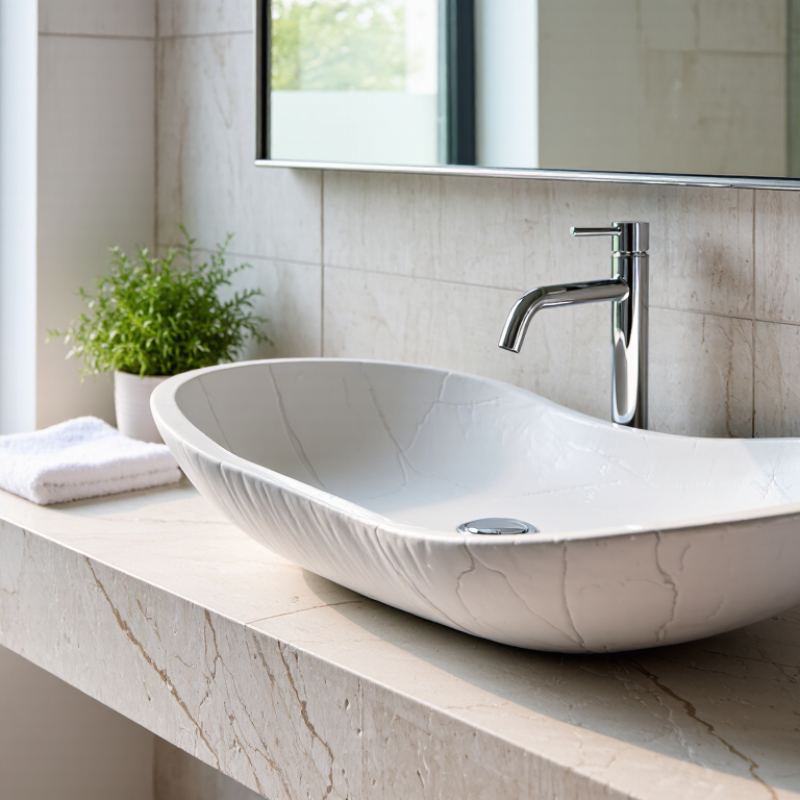
A designer art wash basin is both a functional fixture and a visible piece of interior design. It usually combines sculptural form, refined surfaces, and practical water control. Unlike a basic basin, it may use an unusual silhouette, hand-finished texture, or artistic color variation. Good design should still support comfortable hand washing and easy cleaning.
In professional installation reviews, I look at depth, rim height, drainage, and wall clearance. A shallow basin may appear elegant but can cause splashing. A textured surface can look beautiful, yet it may collect soap residue. Materials such as glazed ceramic, solid surface, and treated stone offer different maintenance needs. Buyers should check dimensional drawings, water resistance, mounting hardware, and compatibility with local plumbing rules. Small errors matter.
Tips: Measure the countertop before ordering. Confirm the faucet position and drain size. Request real product photos when finishes may vary. Test the basin’s daily practicality, not only its appearance. A bold artistic shape may attract attention, but comfort should not be forgotten. Sometimes, simpler proportions work better in a busy bathroom.
Major Styles and Materials Available in 2026
In 2026, designer art wash basins are moving beyond simple round bowls. Countertop vessels create a strong focal point, especially above slim vanities. Asymmetrical forms suit contemporary bathrooms with artistic interiors. Wall-mounted basins save floor space and support cleaner visual lines. Fluted edges add texture, but they can collect soap residue if cleaning access is poor. That detail is easy to miss.
Ceramic remains a dependable material because its glazed surface resists staining and feels familiar during daily use. It also offers many colors and sculptural profiles. Tempered glass creates a lighter appearance, though water marks show quickly on darker finishes. Natural stone gives each basin individual veining and weight. It needs careful sealing and regular inspection. Solid-surface materials allow smooth, integrated designs with fewer visible joints. They can be easier to repair, but heat and abrasive cleaners still require caution.
Experienced buyers should compare samples under bathroom lighting before ordering. A finish that looks soft online may appear glossy in person. Check basin depth, overflow design, tap position, and drain compatibility with local installation rules. Confirm the material’s care instructions and test the proposed mounting surface. Some artistic shapes reduce usable washing space. That is not always a flaw, but it deserves honest consideration. Reliable suppliers should provide technical drawings, tolerance information, and clear packaging details. A beautiful basin must still drain properly, remain stable, and withstand repeated household use.
How to Evaluate Quality, Functionality, and Craftsmanship
2026 Best Designer Art Wash Basin for Global Buyers
How to Evaluate Quality, Functionality, and Craftsmanship
A designer wash basin should survive daily use, not only photograph well. I inspect the rim, glaze, drain opening, and underside before judging appearance. Look for an even surface without pinholes, crazing, dull patches, or sharp edges. A level rim matters because standing water quickly exposes poor forming. Ceramic thickness should feel consistent around corners and the drain area. I also check packaging quality, since hidden impact damage can appear weeks after installation. That detail is often overlooked.
Function comes from measurements. Confirm basin depth, tap-hole position, overflow design, and wall or counter compatibility. The U.S. Environmental Protection Agency’s WaterSense specification limits bathroom faucets to 1.5 gallons per minute, about 30% below the federal standard. A compatible, efficient faucet can reduce waste without weakening hand-washing performance. For international projects, review EN 14688 requirements and request dimensional drawings, load data, and test records. Do not trust a single showroom sample. Variations can occur between production batches.
Craftsmanship becomes clearer through evidence. Request glaze adhesion results, water absorption data, dimensional tolerances, and quality-control photographs. ISO 9001 certification supports process reliability, but it does not guarantee every basin is flawless. That distinction matters. I would also test the drain slope with a small amount of water and inspect the overflow channel for residue traps. Sometimes the most attractive basin performs poorly there. A careful buyer should accept minor handmade variation only when it is declared, controlled, and suitable for the project.
| Evaluation Dimension | Recommended Benchmark for 2026 Purchasing | Typical Acceptable Range | How Global Buyers Can Verify It | Buyer Relevance |
|---|---|---|---|---|
| Main Material | Vitreous china, fine fire clay, solid surface, stainless steel, tempered glass, or natural stone with clearly declared composition. | Material thickness and composition should remain consistent with the product specification and intended installation method. | Request the technical data sheet, material declaration, sample cross-section, and finish sample. Confirm that the delivered material matches the approved sample. | High |
| Ceramic Water Absorption | ≤ 0.5% for vitreous china used in sanitary applications. | Lower absorption generally indicates a denser ceramic body with improved resistance to staining and moisture penetration. | Ask for a laboratory test report based on the applicable ceramic sanitaryware standard. Do not rely only on visual inspection. | High |
| Surface Glaze and Finish | Uniform color, smooth tactile finish, continuous glaze coverage, and no visible pinholes, crazing, crawling, or discoloration. | Gloss, satin, matte, metallic, and textured finishes may be suitable when their maintenance requirements are documented. | Inspect the basin under direct and angled lighting. Check the rim, drain area, overflow opening, corners, and underside for defects. | High |
| Dimensional Accuracy | Actual dimensions should comply with the approved technical drawing and installation template. | For many ceramic basins, a practical production tolerance is approximately ±2 to ±4 mm, subject to the agreed specification. | Measure length, width, height, rim thickness, drain position, mounting points, and basin depth on pre-shipment samples. | High |
| Basin Depth and Usability | A usable internal depth commonly falls between 100 and 180 mm, depending on the design and installation type. | Shallower basins save visual space but may increase splash risk; deeper basins improve containment but require more clearance. | Review the internal geometry, tap position, user reach, splash test results, and compatibility with the selected faucet. | High |
| Drainage Performance | The basin should drain effectively without persistent pooling around the waste outlet. | A well-formed basin typically uses a consistent slope toward the drain, while the final result depends on waste design and installation. | Conduct a water drainage test using the intended waste fitting. Check for standing water after the flow stops. | High |
| Overflow Function | If an overflow is included, the opening should be unobstructed and compatible with the selected waste fitting. | Basins without overflow require a suitable non-overflow waste and should be clearly identified in the installation instructions. | Fill the basin under controlled conditions and verify the overflow path, drainage speed, and water-level behavior. | Medium |
| Wall and Rim Strength | The basin should withstand normal handling, installation loads, and daily use without cracking or deformation. | Strength depends on material, geometry, firing or curing process, reinforcement, and mounting support. | Request impact, load, or structural test information where available. Inspect the underside for reinforcement and thin weak sections. | High |
| Thermal and Chemical Resistance | The finished surface should tolerate normal hot water, household cleaners, soap, toothpaste, and cosmetics without visible damage. | Resistance varies significantly between ceramic glaze, solid surface, stone, metal, and glass finishes. | Review the care guide and perform controlled tests with approved cleaners. Avoid assuming that abrasive or acidic cleaners are safe. | High |
| Installation Compatibility | Clear installation drawings should specify countertop cut-out, wall clearance, faucet location, waste size, and fixing method. | Common waste outlet sizes include approximately 32 mm and 40 mm, but the correct size must be confirmed for each market and fitting system. | Compare the basin drawing with local plumbing standards, countertop fabrication requirements, brackets, traps, and faucet dimensions. | High |
| Ergonomics and Splash Control | The basin should provide comfortable hand-washing space with a faucet angle and water landing point that minimize splash. | Performance is influenced by basin depth, bowl curvature, faucet height, spout reach, and water pressure. | Test the complete basin-and-faucet combination rather than evaluating the basin alone. | High |
| Craftsmanship Consistency | Shape, color, gloss level, edge profile, drain alignment, and surface texture should remain consistent across the production batch. | Small handmade variations may be acceptable for artisan designs when they are defined and approved before production. | Use a signed master sample, approved color chip, defect classification, and pre-shipment inspection plan. | High |
| Quality Control Records | Each batch should have documented inspection results covering dimensions, appearance, leakage, drainage, and packaging. | Inspection frequency may be based on order quantity and risk, but critical defects should be checked on every unit. | Request inspection checklists, sampling procedures, corrective-action records, and photographs linked to the production batch. | High |
| Packaging and Transit Protection | Packaging should protect fragile edges, glazed surfaces, drain areas, and mounting points during international transport. | Suitable protection may include molded inserts, edge guards, moisture-resistant cartons, and reinforced outer packaging. | Review packaging drawings, drop-test or transit-test results, pallet stability, carton markings, and container loading method. | High |
| Documentation and Compliance | Product documents should include installation instructions, maintenance guidance, material information, dimensions, and applicable test evidence. | Required documents differ by destination market, project type, building code, and public or residential application. | Check the destination country’s sanitaryware, plumbing, chemical safety, labeling, and construction-product requirements before ordering. | High |
| Warranty and After-Sales Support | Written warranty terms should define coverage, exclusions, claim evidence, replacement procedure, and response time. | Warranty duration varies by material and supplier policy; the written terms are more important than an informal promise. | Review the warranty document, spare-part availability, replacement packaging, claim process, and responsibility for transit damage. | Medium |
Global Buyer Guide to Sizes, Standards, and Compatibility
2026 Best Designer Art Wash Basin for Global Buyers
Global Buyer Guide to Sizes, Standards, and Compatibility
Choosing an art wash basin starts with the room, not the photograph. Measure the available width, depth, and height before reviewing decorative shapes. Common basin widths range from 400 to 800 millimeters, while compact models suit narrow guest bathrooms. A deep vessel may look impressive, yet it can create uncomfortable splash zones near the countertop edge. Leave practical clearance around taps, mirrors, doors, and electrical fittings.
Compatibility requires careful checking. Confirm the waste outlet diameter, tap-hole position, overflow design, and mounting method. Vessel basins need reinforced countertops and suitable tap heights. Wall-mounted basins require secure fixing points inside the wall. Countertop thickness also affects drain connection length. These details are easy to miss. I have seen attractive installations fail because the waste pipe sat too high.
Standards differ across markets. Ask for technical drawings, material specifications, load guidance, and test documents before ordering. Verify local plumbing requirements with a qualified installer, especially for water connections and drainage. Ceramic, stone resin, and tempered glass each need different cleaning methods and handling care. Surface color can also change under showroom lighting. Request physical samples when possible. Exact fit matters more than visual novelty. A small tolerance error can force expensive countertop changes. Allow access for maintenance, even when the basin is designed as a sculptural centerpiece.
2026 Best Designer Art Wash Basin for Global Buyers
Global Buyer Guide to Sizes, Standards, and Compatibility
The chart compares common designer wash basin width bands used in international residential and hospitality projects. Compact models around 400–500 mm suit powder rooms, 600 mm is a common single-basin planning size, and 800–1000 mm is typically selected for larger vanities or shared-use installations. Before purchasing, verify the basin cut-out, tap-hole configuration, waste outlet diameter, overflow arrangement, countertop depth, and local plumbing requirements. Many markets use 32 mm or 40 mm nominal waste connections, but local standards and project specifications should always be confirmed.
Sourcing, Shipping, Installation, and Long-Term Maintenance
2026 Best Designer Art Wash Basin for Global Buyers
Sourcing a designer art wash basin requires more than choosing an attractive shape. Confirm the basin’s dimensions, drain position, wall clearance, overflow design, and water resistance before ordering. I have seen beautiful pieces fail because the countertop opening was measured incorrectly. Request technical drawings, material samples, surface-finish photos, and a pre-shipment inspection report. Ask about replacement parts, packaging standards, and warranty terms. Small details matter.
Shipping needs careful planning. A reinforced wooden crate, corner protection, moisture barriers, and shock indicators can reduce transit damage. Confirm the gross weight, crate size, delivery address, and customs documents with the supplier and freight agent. Inspect the crate before signing for delivery. Photograph every side. If damage appears, record it immediately. Delayed reporting can weaken a valid claim.
Installation should follow local plumbing requirements and the basin manufacturer’s instructions. A qualified installer should check wall strength, countertop support, drain alignment, and sealant compatibility. Do not overtighten ceramic or stone fittings. That mistake can create hidden stress. After installation, run water slowly and inspect joints underneath. Long-term maintenance is usually simple: use a soft cloth, mild soap, and clean water. Avoid abrasive powders, harsh acids, and standing chemicals. Check seals and drainage every few months. I still recommend a practical review after the first year, because real bathroom conditions often reveal weaknesses that showroom testing misses.
FAQS
Check the rim, glaze, drain opening, and underside. Look for pinholes, cracks, dull patches, and sharp edges. Details matter.
A level rim helps water drain properly. An uneven rim can leave shallow pools after hand washing. Measure twice.
Measure width, depth, and height first. Check clearances around taps, mirrors, doors, countertops, and electrical fittings. A beautiful basin may still fit badly.
Confirm the waste outlet diameter, tap-hole position, overflow design, and mounting method. Check drain length against countertop thickness. Small errors become expensive.
Request technical drawings, material specifications, load guidance, dimensional tolerances, and test records. Ask for surface samples and quality-control photographs.
Ceramic, stone resin, and tempered glass need different cleaning methods. Use a soft cloth, mild soap, and clean water. Avoid abrasive powders and harsh chemicals.
Use reinforced wooden crates, corner protection, moisture barriers, and shock indicators. Photograph every crate side before accepting delivery. Inspect immediately.
A qualified installer should check wall strength, countertop support, drain alignment, and sealant compatibility. Do not overtighten fittings. Hidden stress can cause later damage.
Run water slowly and inspect the joints underneath. Test the drain slope and overflow channel. Review the basin again after one year. Showroom testing may miss real weaknesses.
Conclusion
A Designer Art Wash Basin combines practical bathroom functionality with distinctive artistic expression, making it a focal point in residential, hospitality, and commercial interiors. In 2026, global buyers can choose from contemporary, minimalist, sculptural, vintage-inspired, and handcrafted styles, with materials such as ceramic, porcelain, stone, glass, solid surface, and carefully treated metal. The most suitable option should balance visual appeal with durable construction, smooth surfaces, reliable drainage, stable mounting, and consistent craftsmanship.
Before purchasing, buyers should carefully confirm basin dimensions, bowl depth, tap-hole placement, overflow design, drainage connections, and compatibility with local plumbing standards. Sourcing decisions should also consider production lead times, protective packaging, shipping conditions, installation requirements, and after-sales communication. Proper installation and regular cleaning with suitable, non-abrasive products can help preserve the basin’s finish and performance over time. By evaluating design, quality, technical compatibility, logistics, and maintenance together, buyers can select a distinctive wash basin that delivers lasting value across different markets.

Blog Tags: