

Blog & Articles
Bathroom Insights & Guides
Expert advice, design inspiration, and comprehensive buying guides for luxury bath spaces.
2026 Best Under Counter Basin Types for Global Buyers
Table of Contents
Choosing the right Under Counter Basin in 2026 requires more than comparing prices and glossy photographs. Global buyers now examine basin material, rim precision, drainage performance, packaging strength, and installation support. A basin may look elegant in a showroom, yet fail when its cutout template is inaccurate or its underside lacks practical fixing space.
Common options include vitreous china, porcelain, fireclay, solid surface, stone resin, and stainless steel. Each type behaves differently. Ceramic offers familiar durability and easier cleaning. Solid surface provides seamless styling and flexible color choices. Stone resin feels substantial, but its weight can complicate transport and countertop installation. Stainless steel suits commercial environments, although some residential buyers may find its appearance too industrial.
Small details matter. Check the internal depth, overflow position, waste compatibility, glaze consistency, and carton protection. A 10-millimeter mismatch can delay an entire vanity project. Freight distance also changes the real cost. Cheap units can become expensive after breakage, replacements, and missed installation dates.
Dieter Rams, a major product-design authority, stated, “Good design is as little design as possible.” This principle remains useful for basin selection. Clean geometry should support daily use, not merely impress in product images. Still, no basin wins everywhere. That is the uncomfortable part. Water conditions, countertop materials, installer habits, and buyer expectations vary widely. This guide compares the leading Under Counter Basin types through practical performance, sourcing reliability, design value, and long-term risk. Some judgments remain subjective, and buyers should verify technical data before placing large orders.
Under Counter Basin Basics and Key Design Features
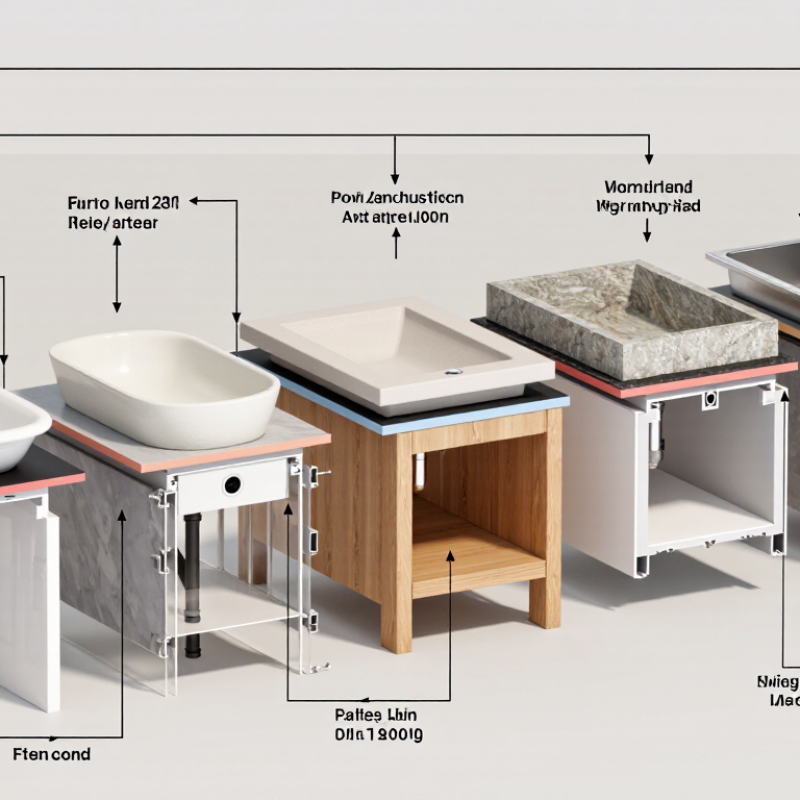
An under-counter basin sits beneath the countertop, leaving the rim hidden and the surface visually continuous. This design suits bathrooms where clean lines and easy wiping matter. Common types include vitreous china, ceramic, stainless steel, solid surface, and stone composite. Each material changes the basin’s weight, feel, maintenance needs, and installation method.
Vitreous china offers a smooth, non-porous surface and handles daily splashes well. Ceramic can provide similar performance, but quality varies with firing and glazing. Stainless steel is lighter and more resistant to impact, although water spots may appear. Solid-surface basins create a seamless appearance with compatible counters. Stone composite feels substantial, yet its weight demands strong cabinet support. Check the basin depth carefully. A deep bowl reduces splashing, but it may restrict knee room or storage below.
Good design also depends on details that are easy to overlook. A gently rounded interior cleans faster than sharp corners. An overflow opening can help control accidental filling, but its location must match local plumbing parts. Confirm the waste size, tap position, countertop thickness, and fixing method before ordering. Experienced installers usually check these measurements twice. It prevents expensive cutting errors.
A narrow rear ledge can hold soap, while a centered drain improves daily usability. However, not every “minimal” basin is practical. Very shallow models may look elegant in photographs and splash during handwashing. I have found that real bathroom use is less predictable than showroom displays. Moisture, cleaning habits, and local water quality should influence the final choice. Always review installation guidance and applicable regional standards.
2026 Best Under Counter Basin Types for Global Buyers
Under-counter basins are installed below the countertop surface, creating a clean edge and making countertop maintenance easier. The chart presents representative common size ranges by basin shape; actual dimensions vary by model and installation requirements.
Rectangular and oval basins commonly provide wider washing areas, while round and square designs are often selected for compact bathrooms. Buyers should also confirm cabinet width, countertop cut-out dimensions, bowl depth, overflow configuration, and faucet compatibility before installation.
Main Types of Under Counter Basins for 2026
Under-counter basins remain popular because their rims sit below the countertop, creating a clean, wipeable surface. The main types for 2026 include vitreous china, porcelain, glass, natural stone, and solid-surface basins. Vitreous china offers strong stain resistance and stable color. Porcelain usually provides a denser, smoother finish, but careless handling can chip its edge.
The market is becoming more material-conscious. Mordor Intelligence’s 2024 Ceramic Sanitary Ware Market report estimates the sector could grow at about 6% annually through 2029. That supports ceramic demand, especially in residential renovation. Meanwhile, the Global Wellness Institute reported that the wellness economy reached $6.3 trillion in 2023. This trend encourages buyers to choose quieter, easier-to-clean bathroom fittings. Practical comfort matters.
Stone basins create visual weight and suit premium interiors, yet porous surfaces need careful sealing. Solid-surface models allow integrated shapes and easier repair, although heat and harsh chemicals may cause damage. Glass basins look light but reveal water spots quickly. In project inspections, the basin type matters less than the installation details: countertop thickness, bracket support, overflow design, and drainage alignment. Check compliance with EN 14688 or ASME A112.19.2 where applicable. A beautiful basin can still fail when the cutout is inaccurate. That part is often underestimated.
Materials, Shapes, Sizes, and Installation Options
2026 Best Under Counter Basin Types for Global Buyers
Material choice affects durability, weight, cleaning, and installation risk. Vitreous china remains practical for high-volume projects. It resists stains and offers consistent color. Solid-surface basins provide seamless edges and easier custom sizing. Natural stone looks distinctive, but it needs sealing and stronger cabinet support.
Grand View Research’s 2024 bathroom sinks market analysis projects continued growth through 2030, supported by residential renovation and commercial construction. That demand favors materials with stable supply and repeatable quality. Buyers should request water absorption, glaze, load, and dimensional inspection data. Appearance alone is not enough.
Shapes should match the countertop and room movement. Oval basins soften compact bathrooms. Rectangular models create more usable washing space. Common widths include 400, 500, and 600 millimeters, but the cutout varies by manufacturer. Leave clearance for the faucet, backsplash, drawer, and plumbing trap.
Under-counter installation requires accurate templates, concealed clips, waterproof sealant, and a countertop edge that can carry the basin.
WaterSense guidance states that labeled bathroom faucets use no more than 1.5 gallons per minute, or 5.7 liters per minute. That supports lower water use, but local standards still require checking. A perfect specification rarely survives the jobsite. I would always verify the actual basin, template, and cabinet before cutting.
How to Compare Basin Quality, Cost, and Maintenance
2026 Best Under Counter Basin Types for Global Buyers
Choosing an under-counter basin starts with the room’s daily demands, not appearance alone. Vitreous china offers a hard, glossy surface that resists stains and remains affordable. Solid-surface basins provide seamless edges and easier countertop matching, but scratches may show sooner. Stainless steel suits commercial bathrooms, although water marks and noise can reduce comfort.
Quality depends on more than material. Check wall thickness, glaze consistency, overflow design, drain compatibility, and dimensional tolerance. A basin that varies by several millimeters can complicate installation.
Cost should include shipping protection, countertop cutting, fittings, and future repairs. A low-priced ceramic basin may become expensive after breakage in transit. Ask suppliers for packed-drop testing, inspection photos, and replacement-part availability.
Compare the full landed cost. Not just the factory quote. For global purchasing, confirm dimensions in millimeters and request technical drawings before approving production. This simple step prevents costly fitting errors.
Maintenance differs in small but important ways.
Smooth glazed ceramic usually needs mild soap and a soft cloth. Avoid abrasive powders, especially near the drain and overflow. Solid-surface models can sometimes be refinished, but repair skill varies by market.
Stainless steel needs prompt drying in hard-water areas. I have seen buyers overlook local water quality, then blame the basin for mineral stains. That judgment is not always fair.
Sample testing remains useful. Leave water overnight, inspect the surface, and check whether the underside feels evenly finished.
Global Buying Standards, Applications, and Supplier Selection
For global buyers, under-counter basins should be selected by application, not appearance alone. Vitreous china suits hotels and housing because it resists stains and tolerates daily cleaning. Solid-surface basins offer precise integration with engineered countertops. Stainless steel works better in healthcare, laboratories, and commercial kitchens. Stone-resin models look substantial, but their weight can increase installation risk. The WHO/UNICEF Joint Monitoring Programme reported in 2023 that 3.5 billion people lacked safely managed sanitation. That figure reminds buyers to value hygiene, durability, and serviceability over fashion.
Supplier evaluation needs measurable evidence. Request dimensional drawings, cutout templates, overflow details, waste compatibility, glaze testing, and batch inspection records. Check compliance with applicable standards, such as EN 14688 for sanitary appliances or ASME A112.19.2/CSA B45.1 for North American markets. ISO 9001 certification supports process control, but it does not prove every basin is defect-free. Third-party test reports and production samples matter more. Industry forecasts, including Grand View Research’s bathroom sinks market analysis, indicate continued global demand, yet market growth does not guarantee consistent quality. That is an uncomfortable point.
Tips: Test one sample with the buyer’s actual countertop material. Check rim flatness with a straightedge. Confirm carton drop testing before shipment. Ask how many replacement pieces the supplier can provide. A low unit price can become expensive after breakage, unclear tolerances, or delayed claims. Suppliers should also disclose installation limits honestly, even when the answer reduces the immediate order.
2026 Best Under Counter Basin Types for Global Buyers - Global Buying Standards, Applications, and Supplier Selection
| Basin Type | Typical Material | Common Shapes | Typical Size Range | Best Applications | Main Advantages | Buyer Considerations |
|---|---|---|---|---|---|---|
| Vitreous China Undercounter Basin | Glazed vitreous china or sanitary ceramic | Oval, rectangular, round | Approximately 400–650 mm wide; 300–500 mm front-to-back | Residential bathrooms, hotels, apartments, commercial washrooms | Good stain resistance, low water absorption, easy cleaning, broad global acceptance | Confirm glaze quality, overflow design, mounting clips, cut-out template, and compliance with the destination-market standard |
| Fireclay Undercounter Basin | High-fired fireclay ceramic | Rectangular, square, farmhouse-inspired profiles | Approximately 450–750 mm wide; 350–550 mm front-to-back | Premium residential projects, hospitality, classic or durable interior schemes | Heavy-duty appearance, strong thermal resistance, robust glazed surface | Higher shipping weight and breakage risk; inspect wall thickness, dimensional tolerance, packaging, and pallet protection |
| Solid Surface Undercounter Basin | Acrylic-based or mineral-filled solid surface | Rectangular, oval, integrated-bowl profiles | Approximately 400–700 mm wide; 300–500 mm front-to-back | Modern homes, healthcare interiors, hotels, accessible washroom projects | Repairable surface, design flexibility, seamless visual integration with some countertops | Check heat resistance, chemical resistance, color consistency, repair method, and compatibility with the countertop adhesive system |
| Stainless Steel Undercounter Basin | Corrosion-resistant stainless steel, commonly grades in the 300 series | Rectangular, square, compact round | Approximately 350–600 mm wide; 300–450 mm front-to-back | Healthcare, laboratories, public facilities, utility and commercial washrooms | Lightweight, impact resistant, hygienic, and suitable for demanding service conditions | Verify steel grade, sheet thickness, weld quality, surface finish, sound-deadening treatment, and resistance to cleaning chemicals |
| Natural Stone or Composite Stone Basin | Natural stone, engineered stone, or mineral composite | Rectangular, oval, custom geometric forms | Approximately 400–800 mm wide; 350–550 mm front-to-back | Luxury residences, premium hotels, bespoke commercial interiors | Distinctive appearance, high design value, and potential color or texture customization | Confirm sealing requirements, porosity, weight, color variation, edge finish, installation support, and safe lifting procedures |
| Tempered Glass Undercounter Basin | Tempered safety glass | Round, oval, contemporary geometric forms | Approximately 350–600 mm wide; 300–450 mm front-to-back | Decorative residential bathrooms, hospitality and design-led interiors | Strong visual appeal, non-porous surface, and easy color or texture coordination | Request evidence of safety-glass processing, edge finishing, impact performance, water-mark visibility, and packaging protection |
Global Buying Standards and Technical Checks
| Inspection Dimension | What to Specify | Why It Matters | Recommended Buyer Evidence |
|---|---|---|---|
| Product Standard | Applicable sanitary-appliance requirements for the destination market, such as EN 14688 or ASME A112.19.2/CSA B45.1 where applicable | Standards may differ by country and can affect testing, labeling, installation, and market access | Current test reports, declaration of conformity, technical data sheet, and destination-market approval records |
| Dimensions and Tolerances | Overall length, width, depth, rim width, bowl depth, drain position, overflow position, and countertop cut-out dimensions | Small dimensional differences can cause countertop, drain, faucet, or mounting problems | Approved engineering drawing, inspection report, cut-out template, and first-article sample |
| Water Performance | Drain compatibility, bowl drainage, overflow function where included, and resistance to leakage | Poor drainage or an incompatible overflow can increase installation and maintenance issues | Drainage test results, water-retention inspection, overflow test, and installation instructions |
| Surface and Hygiene | Smoothness, glaze or coating consistency, non-porosity where claimed, stain resistance, and cleanability | Bathrooms and healthcare areas require surfaces that can be cleaned without premature deterioration | Surface inspection, chemical-resistance information, cleaning guidance, and batch color approval |
| Packaging and Logistics | Individual protection, carton strength, pallet configuration, moisture control, handling marks, and spare-parts policy | Ceramic, stone, glass, and finished surfaces are vulnerable to impact and transit damage | Packing specification, drop or vibration test evidence where required, loading photos, and damage-claim procedure |
Supplier Selection Scorecard
| Selection Criterion | Suggested Weight | Minimum Requirement | Preferred Evidence |
|---|---|---|---|
| Regulatory Compliance | 20% | Products match the standards and labeling rules of the target market | Independent laboratory reports and traceable technical documentation |
| Dimensional Quality | 20% | Consistent dimensions, cut-out accuracy, and controlled production tolerances | Pre-shipment inspection records and approved golden sample |
| Material and Surface Performance | 15% | Material specification is clear and surface defects are controlled | Material certificates, finish samples, and chemical or stain-resistance data |
| Production Capacity | 15% | Can meet required quantity, delivery window, and repeat-order consistency | Capacity plan, lead-time record, quality-control process, and backup production plan |
| Packaging and Export Handling | 10% | Packaging protects the basin through normal international transport | Packaging validation, loading method, pallet photos, and claims-response procedure |
| Customization and Documentation | 10% | Supplier can provide drawings, samples, installation guides, and agreed packaging marks | Document-control system, sample approval process, and clear change-notification policy |
| Total Cost of Ownership | 10% | Price is evaluated together with freight, installation, breakage, warranty, and replacement costs | Detailed quotation, warranty terms, spare-parts availability, and landed-cost comparison |
FAQS
It sits beneath the countertop, hiding the rim. The surface looks continuous and wipes clean easily. It suits modern bathrooms.
Common choices include vitreous china, ceramic, stainless steel, solid surface, and stone composite. Each material affects weight, cleaning, durability, and installation.
Yes. Its smooth, non-porous surface resists daily stains and splashes. A soft cloth usually handles routine cleaning.
Stone feels substantial but may need sealing. It also requires strong cabinet support. Solid surface looks seamless, but harsh chemicals and heat can damage it.
Oval basins soften compact rooms. Rectangular models provide more washing space. Typical widths include 400, 500, and 600 millimeters, but cutout sizes vary.
Yes. A deeper bowl usually reduces splashing. However, it may reduce knee room or storage space below.
Confirm the basin depth, countertop thickness, waste size, tap position, overflow location, and fixing method. Check the cabinet and plumbing trap, too.
Accurate templates, concealed clips, waterproof sealant, and proper bracket support matter. Drainage must align correctly. A small cutting error can become expensive.
Not always. They may look elegant in photographs but splash during handwashing. Real bathroom use is messier than a showroom display.
Request dimensional, load, glaze, and water-absorption information. Verify the actual basin and template before cutting. I would check twice, honestly.
Conclusion
This guide to the 2026 best Under Counter Basin types helps global buyers understand how these basins combine clean visual lines, practical space use, and reliable bathroom performance. It explains core design features, including concealed rim installation, smooth transitions with the countertop, overflow options, drainage compatibility, and accessibility considerations. It also compares major basin types by shape, depth, mounting method, and intended application, from compact residential bathrooms to demanding hospitality and commercial projects.
The article reviews common materials such as ceramic, vitreous china, solid surface, glass, and engineered composites, together with available sizes, shapes, colors, and installation options. Buyers will learn how to evaluate quality through surface consistency, dimensional accuracy, water drainage, structural strength, warranty terms, and long-term maintenance needs while balancing purchase and installation costs. Finally, it outlines global buying standards, project applications, packaging and documentation requirements, and practical supplier-selection criteria to support efficient sourcing and dependable international procurement.

Blog Tags: