


Blog & Articles

Bathroom Insights & Guides

Expert advice, design inspiration, and comprehensive buying guides for luxury bath spaces.

0%

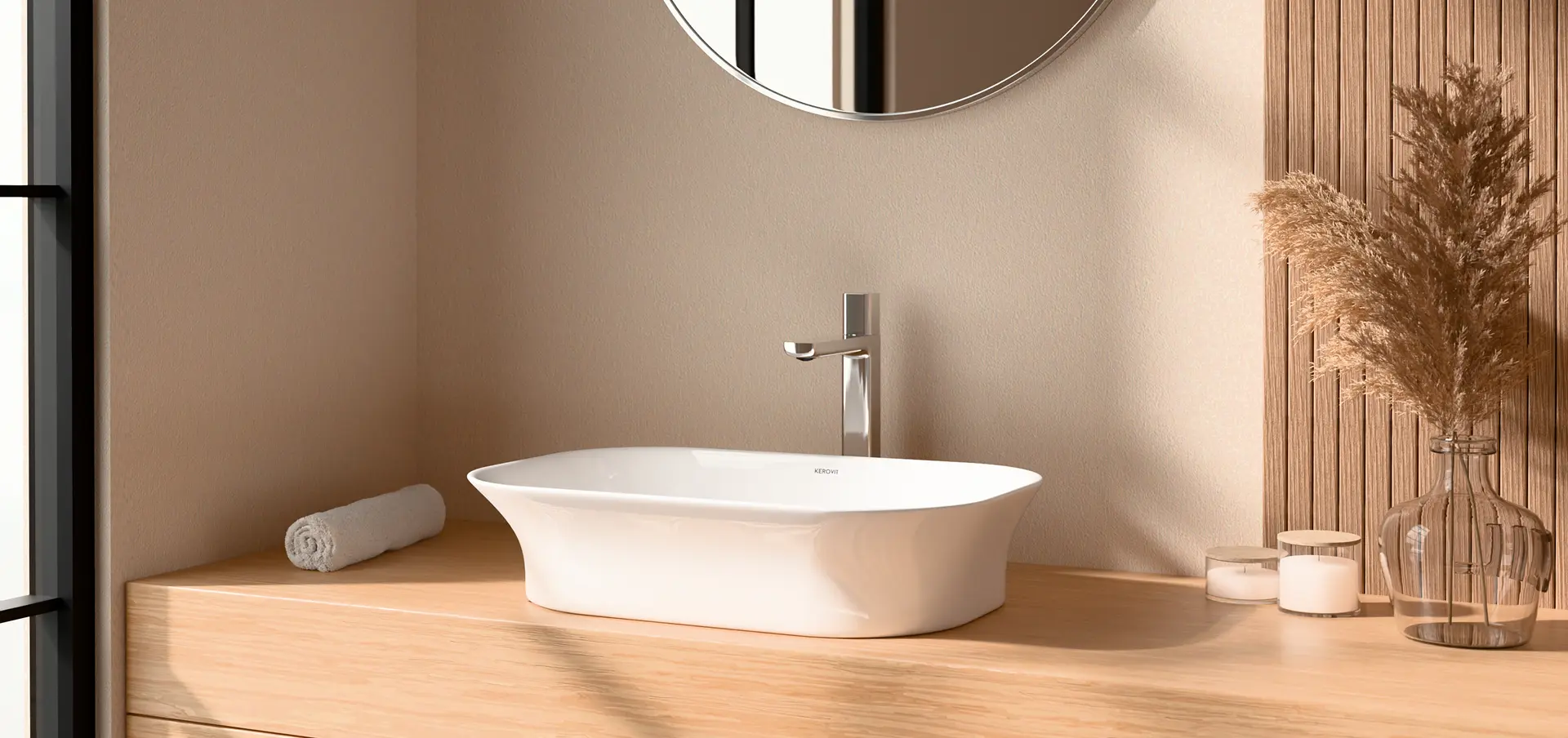
For global buyers, choosing a Countertop Wash Basin in 2026 is no longer a simple style decision. It affects installation, cleaning, water control, durability, and long-term bathroom comfort. Vessel basins remain popular for their sculptural appearance. Semi-recessed designs suit narrow countertops and busy family bathrooms. Integrated solid-surface models offer fewer joints and easier daily maintenance. Ceramic, porcelain, tempered glass, natural stone, stainless steel, and mineral composite each create a different user experience.

Small details matter. A 500-millimeter basin may look balanced on a showroom counter but feel cramped beside a wide faucet. A deep bowl can reduce splashing, yet it may be uncomfortable for children or shorter users. Buyers should check waste-hole size, overflow design, tap height, countertop strength, packaging quality, and replacement-part access. Local plumbing practices also vary. A product suitable for one market may require adapters elsewhere.

Design should serve use.

Philippe Starck, a renowned designer whose bathroom collections include Duravit collaborations, once said, “Design is the method of putting form and content together.” That principle remains useful when comparing Countertop Wash Basin types. Beauty attracts attention, but reliable drainage and stable mounting decide satisfaction after installation. Still, no single basin fits every hotel, apartment, villa, or commercial project. Even experienced buyers can overlook cleaning access beneath a raised bowl. This guide examines the leading 2026 basin types, their practical strengths, and their less obvious limitations, helping international purchasers make a more informed, realistic choice.
2026 Top Countertop Wash Basin Types for Global Buyers?

Countertop Wash Basin Basics: Definitions, Materials, and EN 14688 Criteria

A countertop wash basin sits on top of a vanity or solid worktop. Its rim remains visible, unlike an undermount basin. This design creates a furniture-like appearance and leaves more storage below. Common materials include vitreous china, fireclay, tempered glass, natural stone, solid surface, and stainless steel. Vitreous china remains practical because its glazed surface resists staining and simplifies daily cleaning. Stone looks distinctive, but porous finishes need careful sealing. Glass shows water spots quickly. That detail is often underestimated.

EN 14688:2015+A1:2018 defines functional requirements and test methods for sanitary wash basins. Buyers should check overflow performance, waste connection, load resistance, cleanability, and durability. The standard also classifies basins by installation method and overflow provision. These details matter more than appearance alone. A basin without an overflow needs compatible drainage and careful site planning. I would request test evidence, dimensional drawings, and installation instructions before approving a shipment. Small errors become expensive on a tiled countertop.

The 2024 Houzz U.S. Bathroom Trends Study reported that 33% of homeowners upgraded their vanity area during renovation. This supports demand for visible, furniture-style basins, but it does not prove every market prefers countertop installation. Regional water habits, bathroom size, and installer skills still matter. A 2024 Grand View Research review also identifies ceramic sanitary ware as a major market segment. However, market forecasts are not product certification. Buyers should compare EN 14688 evidence, surface quality, wall thickness, and replacement-part availability.

2026 Top Countertop Wash Basin Types for Global Buyers

This chart compares representative external widths commonly used for countertop wash basins. Round, oval, rectangular, and square designs are widely selected for residential and hospitality bathrooms. Actual dimensions vary by installation requirements and product specification.

For global purchasing, EN 14688 should be reviewed for applicable wash-basin performance requirements, including cleanability, load resistance, drainage, overflow performance where provided, resistance to temperature changes, resistance to chemicals and staining, and durability. Common materials include vitreous china, ceramic, tempered glass, solid surface, and stainless steel.

Vessel Basins Compared: Sizes, Heights, and ADA’s 34-Inch Lavatory Guidance

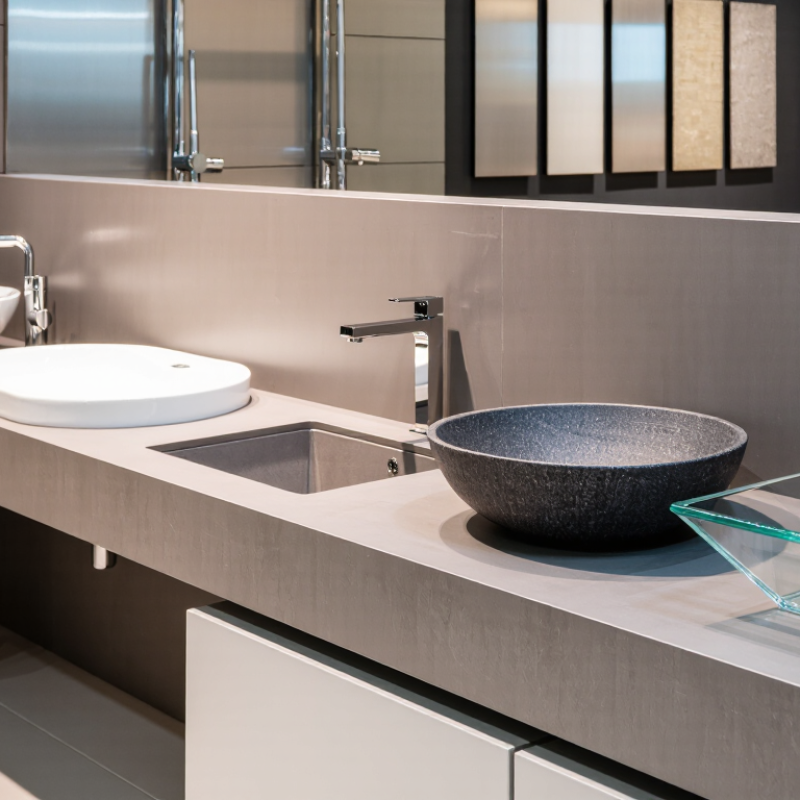
In 2026, global buyers are comparing countertop wash basin types by appearance, usable space, and installation height. Vessel basins sit above the counter, so they create a strong visual feature. Round, oval, and rectangular shapes are common choices. Compact models suit powder rooms, while wider basins reduce splashing in busy bathrooms.

Size changes the whole installation. A basin measuring 400 to 450 millimeters wide may fit a narrow counter. Larger models often need stronger support and deeper cabinets. Vessel height also matters. If the basin is 120 millimeters tall, a 900-millimeter counter creates an uncomfortable rim height. A lower counter may provide better reach for children and seated users.

This detail is often missed. Under ADA guidance, a lavatory rim or counter surface should be no higher than 34 inches above the finished floor in applicable accessible facilities. A raised vessel can exceed that limit, even when the counter itself meets it. Designers must also protect knee clearance, provide clear floor space, and keep pipes safely insulated beneath the basin. Faucet controls should be reachable with one hand and require limited force.

Measurements should be checked after the countertop, basin, drain, and mounting hardware are selected. Small changes matter. A technically attractive vessel may fail the access review. ADA rules apply mainly to covered facilities, while local standards may differ across countries. That uncertainty deserves careful verification, not guesswork.

Integrated and Undermount Basins: Hygiene and Installation Standards

Integrated and undermount wash basins are popular choices for global buyers seeking cleaner countertop designs. Each option needs careful hygiene and installation planning.

An integrated basin

forms one continuous surface with the countertop. Fewer joints mean fewer places for soap residue, dust, and bacteria to collect. Its smooth transition also simplifies daily wiping around the bowl. However, repairs can be complicated if the basin surface becomes damaged. Installers should check the countertop material, drainage slope, overflow design, and local plumbing requirements. A hidden trap is not always easy to service.

Undermount basins

sit below the countertop edge. This layout lets water and debris move directly into the bowl during cleaning. The exposed countertop edge must be polished, sealed, and supported correctly. Poor bonding can create a narrow dark line beside the basin. That line often holds moisture. It looks minor, but it deserves attention. Silicone sealant should suit the countertop material and wet-area conditions. Installation guides and local building standards should be reviewed before cutting the counter.

Tips:

Confirm the basin dimensions on site, not only on the drawing. Leave access for trap maintenance. Use a gentle cleaner and a soft cloth. Inspect the seal every few months, especially in busy hotels or shared bathrooms. A seamless appearance is helpful, but it is not proof of perfect hygiene. Regular inspection still matters.

Ceramic, Glass, Stone, and Solid-Surface Basins: ISO 13006 Comparison

2026 Top Countertop Wash Basin Types for Global Buyers?

Ceramic remains the most measurable option for international procurement. ISO 13006 classifies ceramic products mainly by water absorption, not complete basin performance. For example, BIa ceramics absorb 0.5% or less, while BIII products exceed 10%. That distinction matters near a wet countertop. However, ISO 13006 is not a basin certification. EN 14688 or ASME A112.19.2 may better address overflow, drainage, and structural requirements.

Glass basins offer visual lightness and easy inspection, but edge chips and surface staining require careful packaging.

Natural stone creates a strong tactile impression. It also demands sealing, consistent thickness, and testing for acid sensitivity.

Solid-surface basins allow integrated rims and discreet repairs, yet thermal movement and discoloration need evaluation.

Small details matter. A thin rim can change installation risk.

Fortune Business Insights valued the global sanitary ware market at about USD 40.15 billion in 2023 and projected continued growth through 2032. That demand does not make every material suitable for every region. Humid climates, hard water, shipping distance, and local installation skills can alter the best choice. A buyer should request absorption data, dimensional tolerances, load testing, coating information, and cleaning guidance. One common mistake is treating a tile standard as a complete wash-basin standard. It is useful evidence, but not the whole decision.

Global Buyer Selection: WaterSense 1.5-GPM Faucet Compatibility and Durability

For global buyers, countertop wash basins should be judged by faucet compatibility, not appearance alone. Vessel basins suit modern bathrooms, while semi-recessed and integrated designs offer better splash control. Each option must match the faucet’s spout height, reach, mounting hole, and drainage position. Measure twice.

The U.S. EPA WaterSense specification limits bathroom faucet flow to 1.5 gallons per minute at 60 psi, compared with the older 2.2-GPM standard. This can reduce water use by roughly 30%, according to EPA technical guidance. However, low flow can feel weak when aerators clog or supply pressure drops. Buyers should request performance data at 20 and 60 psi, not only the maximum rating. A basin with a shallow bowl may also create more splash under a high, fast stream.

Durability depends on several details. Look for vitreous china or certified solid-surface materials, smooth glazed drainage areas, corrosion-resistant fittings, and compliance with ASME A112.18.1/CSA B125.1 requirements. The International Code Council also emphasizes correctly sized, accessible traps and drainage connections in plumbing installations. In field checks, poorly sealed overflow joints often cause more trouble than the basin material itself. That is easy to overlook. For export projects, confirm thread standards, replacement cartridge availability, packaging protection, and installation instructions for each destination. Fancy finishes may photograph well, but they can expose scratches quickly in busy hotels and rental housing.

2026 Top Countertop Wash Basin Types for Global Buyers

Global Buyer Selection: WaterSense 1.5-GPM Faucet Compatibility and Durability

The comparison below focuses on common countertop wash basin configurations, practical material performance, installation considerations, and compatibility with bathroom faucets delivering no more than 1.5 gallons per minute at 60 psi.

Note: WaterSense is a faucet efficiency specification; the basin itself is not certified by the faucet program. Actual compatibility also depends on faucet hole layout, drain size, overflow design, counter thickness, and local plumbing requirements.

Basin Type Typical Materials Common Size Range Durability Profile Water and Stain Resistance 1.5-GPM Faucet Compatibility Installation Requirements Best-Fit Applications
Above-Counter Vessel Vitreous china, ceramic, tempered glass, stone resin 400–600 mm diameter or 400–600 mm length High for ceramic and stone resin; glass requires impact care Very good when glazed or non-porous; seal natural stone regularly Excellent with a compatible high-rise faucet or wall-mounted faucet; 1.5 GPM is generally suitable for normal handwashing Requires a reinforced countertop and a drain assembly suitable for vessel basins; faucet clearance must be checked Residential bathrooms, hospitality interiors, premium renovation projects
Semi-Recessed Basin Vitreous china, fine fireclay, ceramic 450–650 mm width; 350–500 mm front-to-back High; exposed front edge should be protected during transport and fitting Excellent with a properly fired or glazed surface Very good; suitable for deck-mounted 1.5-GPM faucets when spout reach and basin target area are correctly aligned Needs a precisely cut countertop opening and adequate cabinet support below the projecting bowl Space-saving bathrooms, narrow vanities, accessible layouts
Undermount Basin Vitreous china, ceramic, solid surface, stainless steel 450–650 mm width; 350–500 mm front-to-back High when professionally supported and sealed; edge bonding is critical Very good; countertop joint requires water-resistant sealing and periodic inspection Excellent because the faucet is normally mounted separately on the countertop or wall; low flow reduces splash when correctly positioned Requires accurate templating, mechanical support, compatible countertop material, and a suitable overflow or non-overflow drain Modern vanities, easy-clean commercial washrooms, high-use residential bathrooms
Drop-In Basin Vitreous china, ceramic, composite resin 500–700 mm width; 400–550 mm front-to-back High; rim protects the cutout and distributes installation loads Excellent on glazed or sealed surfaces; clean the rim joint regularly Excellent for centerset or single-hole 1.5-GPM faucets, subject to the basin's pre-drilled hole pattern Requires a countertop cutout, rim sealant, drain connection, and adequate clearance beneath the counter Replacement projects, rental housing, standardized bathroom furniture
Wall-Mounted Countertop Basin Vitreous china, ceramic, mineral composite 450–650 mm width; 350–500 mm front-to-back High if fixed to structural backing or approved brackets Very good; exposed wall and joint areas should be sealed against moisture Very good with wall-mounted or short-deck 1.5-GPM faucets; spout projection and water-landing position are especially important Requires structural wall reinforcement, accurate mounting height, and concealed or carefully routed plumbing Accessible bathrooms, compact spaces, barrier-reduced installations
Solid-Surface Integrated Basin Acrylic solid surface, engineered mineral composite 600–1,200 mm overall vanity width; custom bowl sizes available Very good; minor surface scratches may be repairable depending on material Excellent and generally non-porous; avoid harsh abrasive chemicals Excellent with deck-mounted 1.5-GPM faucets; integrated geometry can be optimized to control splash Requires a compatible vanity system, accurately positioned waste outlet, and allowance for thermal movement where specified Hotels, healthcare interiors, family bathrooms, continuous countertop designs
Natural Stone Vessel Basin Granite, marble, travertine, slate 400–600 mm diameter or 400–600 mm length High mechanical strength; edges can chip and some stones are vulnerable to thermal shock Depends on porosity; sealing is normally required and must be renewed as recommended Good with a high-rise or wall-mounted 1.5-GPM faucet; use a splash-resistant spout position and compatible drain Requires a strong, level counter, careful handling, suitable stone sealant, and a drain designed for the basin Luxury residential projects, boutique hospitality, design-focused interiors
Stainless-Steel Countertop Basin Stainless steel, commonly corrosion-resistant grades for sanitary applications 400–700 mm width; 350–500 mm front-to-back Very high impact resistance; surface may show scratches or water marks Excellent against water; chloride-rich cleaners and stagnant salty deposits should be avoided Excellent with deck-mounted or wall-mounted 1.5-GPM faucets; basin depth and sound control affect user comfort Requires secure counter fixing, sound-damping support where needed, and corrosion-compatible plumbing hardware Commercial washrooms, public facilities, utility areas, high-traffic installations
Flow-rate selection
A 1.5-gallon-per-minute faucet is generally suitable for handwashing when the basin depth, spout reach, and water-landing position are properly matched.
Overflow check
Confirm whether the basin has an overflow opening before ordering the drain. Overflow and non-overflow drains are not interchangeable in every installation.
Global buyer checklist
Verify metric or imperial dimensions, faucet-hole configuration, waste outlet size, mounting method, countertop load capacity, packaging protection, and local plumbing codes.

FAQS

What makes a vessel basin different from an integrated or undermount basin?

A vessel basin sits above the counter and creates a visible feature. Integrated basins form one continuous surface. Undermount basins sit below the counter edge. Each design changes cleaning, splash control, and installation height.

What basin size suits a narrow bathroom counter?

A basin measuring 400 to 450 millimeters wide may fit a narrow counter. Larger basins need stronger support and deeper cabinets. Measure the counter, cabinet, drain, and mounting hardware together.

How does vessel height affect user comfort?

A 120-millimeter vessel on a 900-millimeter counter may feel too high. A lower counter can improve reach for children and seated users. The rim height matters, not only the counter height.

What accessibility height should designers check?

Applicable accessibility guidance commonly limits the lavatory rim or counter surface to 34 inches above the finished floor. A raised vessel can exceed this limit. Protect knee clearance and clear floor space. Do not rely on the counter measurement alone.

What installation details support better hygiene?

Fewer joints can reduce areas where soap, dust, and moisture collect. Integrated surfaces are easier to wipe around the bowl. Undermount edges need polishing, sealing, and firm support. A thin dark seal line is not harmless.

How should the basin and faucet be matched?

Check spout height, reach, mounting holes, and drainage position. A high faucet above a shallow bowl may increase splashing. Measure twice. That small habit prevents expensive changes.

What should buyers check for low-flow faucet performance?

A bathroom faucet rated at 1.5 gallons per minute at 60 psi uses less water than older 2.2-GPM models. Request performance data at both 20 and 60 psi. Low flow may feel weak when aerators clog or pressure drops. The published maximum is not the whole story.

Which durability details deserve attention during procurement?

Consider vitreous china or certified solid-surface materials. Check smooth glazed drainage areas and corrosion-resistant fittings. Confirm thread standards, replacement parts, packaging, and local installation instructions. A beautiful finish may scratch quickly in busy bathrooms. That risk is easy to underestimate.

How often should seals and hidden plumbing be inspected?

Inspect seals every few months, especially in hotels and shared bathrooms. Leave access for trap maintenance. Hidden traps can be difficult to service. A seamless appearance does not prove perfect hygiene.

Conclusion

This guide introduces the Countertop Wash Basin as a practical and decorative lavatory solution for residential, hospitality, and commercial spaces. It explains essential design features, common materials, and key performance considerations under EN 14688, including drainage, overflow, durability, and water resistance. Vessel basins are compared by bowl size, rim height, countertop placement, and installation requirements, with attention to the ADA’s 34-inch lavatory guidance for accessible planning.

The article also reviews integrated and undermount basins, emphasizing hygiene, easy cleaning, sealing, and professional installation. Ceramic, glass, natural stone, and solid-surface options are compared through durability, maintenance, appearance, and relevant ISO 13006 considerations for ceramic products. For global buyers, the final selection should balance dimensions, bathroom layout, user comfort, cleaning needs, and long-term reliability. Compatibility with water-efficient faucets, including 1.5-GPM configurations, should be confirmed along with drainage performance, material quality, and local installation requirements.

Avery

Avery

Avery is a seasoned marketing professional with a strong understanding of market strategy, customer needs, and effective business communication. As a key contributor to our company, Avery regularly researches industry developments, emerging opportunities, and practical solutions that can help......