

Blog & Articles
Bathroom Insights & Guides
Expert advice, design inspiration, and comprehensive buying guides for luxury bath spaces.
China Top 10 Thermostatic Shower Mixer Manufacturers?
Table of Contents
China has become a major manufacturing base for bathroom fittings, supported by strong supply chains, engineering talent, and export experience. This guide examines China’s top 10 Thermostatic Shower Mixer manufacturers through a practical procurement lens. It considers product design, temperature-control accuracy, material quality, certifications, production capacity, and after-sales support.
The global bathroom fittings market continues to expand. Grand View Research reports that the global smart bathroom market is growing as consumers seek water efficiency, safety, and connected functions. Mordor Intelligence also identifies Asia-Pacific as a key region in the bathroom fittings market, driven by construction activity and urban development. These trends create opportunities for Chinese manufacturers, but they also increase buyer expectations.
Safety comes first.
A reliable Thermostatic Shower Mixer should maintain stable water temperature, respond quickly to pressure changes, and include a dependable safety stop. Brass body construction, ceramic cartridges, WRAS or ACS approval, and documented testing can reveal production discipline. However, certificates alone do not prove long-term performance. Factory audits, sample testing, and installation feedback still matter.
This selection is not an absolute verdict. Supplier rankings can change with new factories, technologies, and customer experiences. Some manufacturers communicate well but offer inconsistent quality. Others have excellent engineering yet limited overseas service. That difference is easy to miss in a catalogue. Buyers should verify technical drawings, warranty terms, minimum order quantities, and spare-part availability before signing contracts. Data sources include Grand View Research, Mordor Intelligence, ISO 9001 guidance, and applicable regional plumbing standards.
What Is a Thermostatic Shower Mixer?
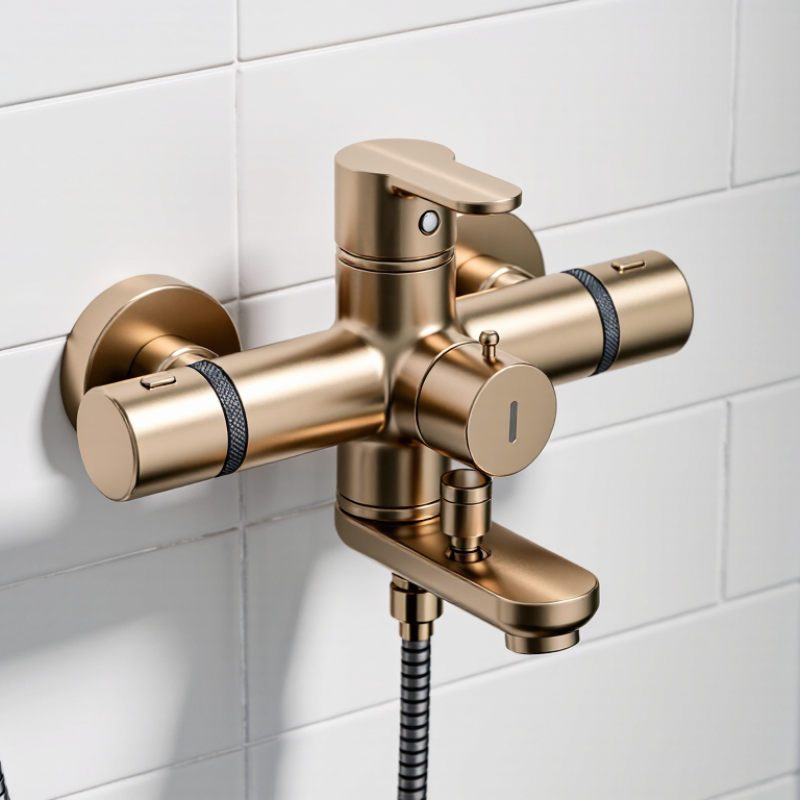
A thermostatic shower mixer combines hot and cold water, then regulates the outlet temperature automatically. Its internal thermostatic cartridge responds to temperature changes within seconds. If cold-water pressure drops, the cartridge restricts hot water to reduce scalding risk. This makes showering more stable in busy homes.
Most models have two controls. One adjusts temperature, while the other controls water flow. A marked safety stop, often near 38°C, helps users select a comfortable setting. The exact setting should follow local guidance and household needs. Children, older adults, and people with reduced sensitivity need extra care.
A practical test is simple. Run the shower, set a steady temperature, then open another tap nearby. The shower should remain reasonably stable, not suddenly become hot. It is not magic. Poor pipe sizing, blocked filters, low pressure, or an incorrectly calibrated cartridge can still cause problems. Hard-water deposits may also make the handle stiff over time. Regular filter cleaning and checking the temperature with a reliable thermometer improve confidence. Installation quality matters more than a polished appearance. Even experienced installers should verify the hot-water limit after fitting, because small errors can affect daily comfort and safety.
How to Evaluate Chinese Thermostatic Shower Mixer Manufacturers
Evaluating Chinese thermostatic shower mixer manufacturers requires more than comparing catalogue prices. Check their production experience, engineering team, and documented quality procedures. A reliable supplier should explain how its thermostatic cartridge controls temperature under changing water pressure. Ask for test data, not only attractive photographs. Temperature stability matters.
Request samples from several shortlisted factories. Test them with cold-water interruptions, low pressure, and repeated handle adjustments. Record the outlet temperature every few minutes. The result should remain comfortable, without sudden heat or chilling. Inspect the brass body, ceramic parts, filters, seals, and surface finish closely. Small scratches often reveal weak handling standards. Not always, but sometimes.
Factory verification adds useful evidence. Review material certificates, inspection records, calibration dates, and batch traceability. Confirm whether production and testing occur in-house or through outside workshops. Independent certification can support credibility, but the certificate must match the actual product model. Ask about warranty terms, replacement cartridges, spare parts, and complaint response times. Clear answers are encouraging. Vague promises are not. My own evaluation mistake was trusting a perfect sample before checking mass-production consistency. A pilot order can expose differences in assembly, plating, and temperature calibration. Keep written specifications, approved samples, and inspection limits in one controlled file. That creates a more reliable basis for comparing the top ten candidates.
China Top 10 Thermostatic Shower Mixer Manufacturers? How to Evaluate Chinese Thermostatic Shower Mixer Manufacturers
This chart presents a practical weighting model for evaluating thermostatic shower mixer manufacturers in China. Thermostatic accuracy and anti-scalding safety receive the highest weights because they directly affect user safety and shower performance. Materials, certifications, warranty support, and production capacity help assess product reliability and supplier capability. The percentages represent evaluation priorities, not the performance of any specific company or brand.
China’s Top 10 Thermostatic Shower Mixer Manufacturers
China’s Top 10 Thermostatic Shower Mixer Manufacturers are gaining attention as bathroom upgrades become more safety-focused. A 2024 Mordor Intelligence report identifies China as a major Asia-Pacific bathroom products market, supported by residential renovation and hospitality construction. Market growth is not the only measure, though. Stable temperature control matters more at the shower wall.
Experienced buyers usually inspect the cartridge, inlet filter, pressure-balance behavior, and service access. A reliable mixer should hold a comfortable temperature near 38°C, even when another tap opens. That expectation reflects testing principles in EN 1111 and ASSE 1016. The standards assess temperature stability, flow performance, and protection against sudden hot-water changes. Small parts matter. A clogged filter can defeat an excellent design.
The leading ten manufacturers should also be compared through factory evidence, not attractive catalogs. Look for salt-spray testing, cycle testing, traceable brass composition, and documented water-pressure ranges. ISO 9001 certification can support process confidence, but it does not guarantee every product is perfect. That distinction is often missed. The World Health Organization notes that household water safety depends on both equipment and maintenance, making clear installation guidance equally important. Some supplier claims remain difficult to verify. Independent testing, spare-part availability, and real project feedback provide stronger evidence than rankings alone.
| Rank | Anonymous Manufacturer Profile | Primary Product Focus | Typical Temperature Range | Factory Safety Stop | Typical Working Pressure | Common Connection Size | Typical Flow Rate* | Thermostatic Cartridge | Common Compliance References | OEM/ODM Capability | Market Position |
|---|---|---|---|---|---|---|---|---|---|---|---|
| 1 | Manufacturer Profile 01 | Exposed thermostatic shower mixers and bar valves | 20–50°C | 38°C, adjustable | 0.05–1.00 MPa | G1/2 | 8–16 L/min | Wax-element cartridge | EN 1111; model-dependent WRAS, ACS, or cUPC | Available | ★★★★★ |
| 2 | Manufacturer Profile 02 | Concealed thermostatic shower systems | 20–50°C | 38°C, adjustable | 0.05–1.00 MPa | G1/2 and G3/4 | 10–18 L/min | Replaceable thermostatic cartridge | EN 1111; model-dependent CE and cUPC | Available | ★★★★★ |
| 3 | Manufacturer Profile 03 | Commercial and hospitality shower mixers | 20–50°C | 38°C, adjustable | 0.05–1.00 MPa | G1/2 | 9–17 L/min | High-response wax cartridge | EN 1111; model-dependent ACS and WRAS | Available | ★★★★★ |
| 4 | Manufacturer Profile 04 | Thermostatic bath and shower combination valves | 20–50°C | 38°C, adjustable | 0.05–1.00 MPa | G3/4 | 12–20 L/min | Wax-element cartridge with check valves | EN 1111; model-dependent cUPC and CE | Available | ★★★★☆ |
| 5 | Manufacturer Profile 05 | Value-focused exposed shower mixers | 20–50°C | 38°C, adjustable | 0.05–0.80 MPa | G1/2 | 8–14 L/min | Standard replaceable cartridge | EN 1111; model-dependent CE | Available | ★★★★☆ |
| 6 | Manufacturer Profile 06 | Premium brass thermostatic shower columns | 20–50°C | 38°C, adjustable | 0.05–1.00 MPa | G1/2 | 10–18 L/min | High-precision wax cartridge | EN 1111; model-dependent WRAS, ACS, and cUPC | Available | ★★★★☆ |
| 7 | Manufacturer Profile 07 | Stainless-steel and contemporary finish collections | 20–50°C | 38°C, adjustable | 0.05–1.00 MPa | G1/2 | 8–16 L/min | Replaceable thermostatic cartridge | EN 1111; model-dependent CE and cUPC | Available | ★★★★☆ |
| 8 | Manufacturer Profile 08 | Private-label shower mixer programs | 20–50°C | 38°C, adjustable | 0.05–0.80 MPa | G1/2 | 8–15 L/min | Wax-element cartridge | EN 1111; certification varies by target market | Available | ★★★★☆ |
| 9 | Manufacturer Profile 09 | Water-saving thermostatic shower mixers | 20–50°C | 38°C, adjustable | 0.05–1.00 MPa | G1/2 | 6–12 L/min | Flow-optimized thermostatic cartridge | EN 1111; model-dependent water-efficiency testing | Available | ★★★★☆ |
| 10 | Manufacturer Profile 10 | Compact thermostatic mixers for residential projects | 20–50°C | 38°C, adjustable | 0.05–0.80 MPa | G1/2 | 8–14 L/min | Compact replaceable cartridge | EN 1111; model-dependent CE | Available | ★★★☆☆ |
Key Products, Technologies, and Market Strengths
China’s top thermostatic shower mixer manufacturers compete through product depth, temperature control, and manufacturing consistency.
Their key products include exposed shower mixers, concealed valves, bath-shower sets, and commercial thermostatic systems. Many factories support brass, stainless steel, and engineered polymer bodies for different project budgets.
The core technology is the thermostatic cartridge. Wax elements or equivalent sensing systems adjust hot and cold water quickly. Anti-scald stops commonly limit outlet temperature near 38°C. Ceramic diverters, check valves, and insulated handles improve daily safety.
Some manufacturers add flow restrictors, easy-clean nozzles, and memory temperature settings. These details matter in hotels, apartments, and family bathrooms.
Market strength often comes from flexible customization. Export-oriented factories may offer private molds, varied finishes, laser marking, and multilingual inspection documents.
Automated machining improves thread accuracy, while pressure testing checks leaks before shipment. From supplier audits, cartridge quality and assembly training deserve more attention than polished showroom photos.
A beautiful mixer can still perform poorly with unstable water pressure. That is the uncomfortable part.
Rankings also change, because public production data is incomplete and pricing shifts quickly. Buyers should compare test reports, spare-part access, warranty response, and real installation feedback before choosing among China’s leading manufacturers.
How to Choose the Right Chinese Manufacturer for Your Needs
Choosing a Chinese thermostatic shower mixer manufacturer requires more than comparing catalogue prices. Start by defining your target market, installation standards, finish options, and expected annual volume. A factory experienced with similar projects will understand thread sizes, cartridge performance, packaging, and after-sales requirements.
Ask for verifiable evidence. Request material specifications, pressure-test records, temperature-control test results, and independent certification documents where required. Review the production line, assembly area, and quality checkpoints through a live video tour or factory visit. I have found that small details often reveal more than polished presentations. Check whether workers inspect cartridges before installation and whether finished mixers are tested for leakage. Ask for proof.
Sample evaluation should include water temperature stability, handle movement, surface finish, and noise during operation. Test several units from different batches, not only one carefully selected sample. A reliable manufacturer should explain tolerances, replacement-part availability, and warranty handling in writing. Vague promises are risky.
Communication also matters. Compare response speed, technical clarity, and willingness to report defects honestly. Some suppliers look impressive but struggle with drawings or change control. That weakness may appear later. Consider a trial order before committing to large production. It may cost more initially, but it exposes packaging damage, inconsistent finishes, or delayed documents while corrections remain manageable. Do not guess. Ask how the factory records corrective actions and prevents the same issue from returning.
FAQS
It combines hot and cold water and regulates the outlet temperature automatically. Its cartridge reacts within seconds. Shower temperature becomes steadier.
If cold-water pressure drops, the cartridge restricts hot water. This lowers the risk of scalding. It cannot prevent every problem.
One control adjusts temperature. The other controls water flow. A safety stop often sits near 38°C.
Children, older adults, and people with reduced sensitivity need extra care. Check the water with a reliable thermometer. Comfort alone can mislead.
Set a steady shower temperature. Then open a nearby tap. The shower should remain reasonably stable, not suddenly become hot.
Poor pipe sizing, blocked filters, low pressure, and calibration errors can cause trouble. Hard-water deposits may make the handle stiff. Small details matter.
Define your market, installation standards, finish options, and yearly volume. Request material specifications and pressure-test records. Ask for evidence, not polished promises.
Test temperature stability, handle movement, surface finish, leakage, and operating noise. Check several batches. One sample can mislead.
It can reveal damaged packaging, uneven finishes, or delayed documents. Corrections remain easier before larger production. It costs more initially, perhaps.
Compare response speed, technical clarity, and defect reporting. Ask how corrective actions are recorded. A factory may look impressive yet mishandle drawings.
Conclusion
This guide explains what a Thermostatic Shower Mixer is and how it maintains a stable water temperature by balancing hot and cold water automatically. It also outlines the main factors for evaluating Chinese manufacturers, including product quality, temperature-control performance, material selection, certifications, production capacity, customization services, quality management, and after-sales support. These criteria help buyers compare suppliers more objectively and identify manufacturers capable of meeting residential, commercial, and project-based requirements.
The article presents China’s top 10 Thermostatic Shower Mixer manufacturers through their key product features, technical capabilities, manufacturing strengths, and market advantages, without focusing only on price. It also discusses important technologies such as precise temperature regulation, safety protection, durable surface finishes, water-saving design, and compatibility with different installation systems. Finally, readers will learn how to select the right supplier by matching product specifications, order volume, budget, delivery expectations, customization needs, and long-term cooperation goals.

Blog Tags: