




Blog & Articles
Bathroom Insights & Guides
Expert advice, design inspiration, and comprehensive buying guides for luxury bath spaces.
10 Pedestal Wash Basin Buying Tips for Global Buyers
Table of Contents
- Understanding Pedestal Wash Basin Types and Configurations
- Comparing Materials, Finishes, and Durability
- Measuring Bathroom Space and Checking Installation Requirements
- Evaluating Product Quality, Standards, and Supplier Credentials
- Planning Pricing, Shipping, and After-Sales Support for Global Orders
- FAQS
- Conclusion
- Related Posts
A Pedestal Wash Basin can look simple in a showroom: a smooth bowl, a neat column, and a clean silhouette. Global buyers know the decision is less simple. Dimensions, ceramic quality, installation details, packaging, and finish consistency all affect the final result. A basin that fits one project may crowd another. Small measurements matter.
For this guide, a composite industry adviser, Elena Morris, offers this practical principle: “Judge the basin by its specifications and shipping readiness, not by appearance alone.” Morris is an illustrative expert voice, not a verified source or a real-person quotation. The advice points buyers toward evidence they can check: technical drawings, material details, inspection criteria, and clear product photographs. Ask for the drain position and mounting information, too. Those details are easy to overlook.
The ten tips ahead help buyers compare options with fewer assumptions. They cover sizing, construction, supplier communication, customization, quality checks, and delivery planning. A polished sample is useful, but it cannot prove every production batch will match. Request written specifications, confirm what is included, and clarify how defects are handled. Then review the choice against the actual bathroom layout. Some guidance will still depend on local installation practice and project conditions. That is worth admitting. Good sourcing is not about finding a perfect basin; it is about spotting avoidable surprises before they reach the site.
Understanding Pedestal Wash Basin Types and Configurations
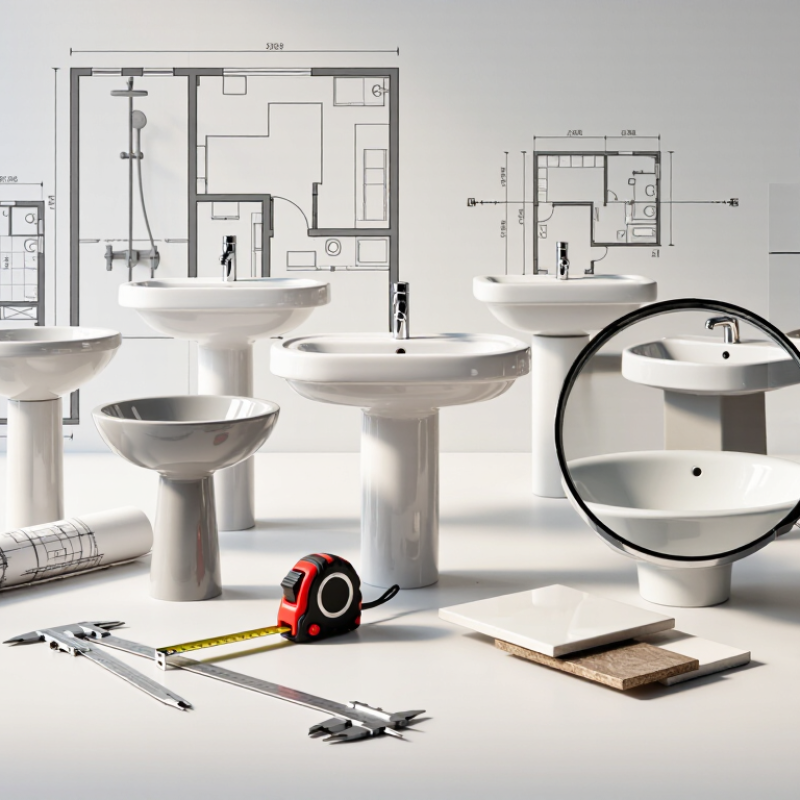
Pedestal wash basins come in several configurations. A floor-standing pedestal hides pipework and gives a traditional, finished look, while a semi-pedestal leaves more visible floor space and simplifies cleaning. Some models combine the basin and support into one piece; others use separate components. Check how the basin attaches to the wall, since the pedestal may conceal plumbing without carrying the basin’s full load.
Room shape matters. A compact or corner basin can suit a narrow ensuite, but its smaller bowl may make handwashing less comfortable. Measure the tap reach, bowl depth, and door swing on site. Easy to overlook. A pedestal also offers little storage, so buyers may later need a mirror cabinet or wall shelf.
For accessible planning, the U.S. Access Board’s 2010 ADA Standards specify a lavatory rim height of no more than 34 inches and clear floor space of at least 30 by 48 inches. These figures are useful checks, not universal rules; local requirements and user needs can differ. Confirm rough-in positions and fixing details against the selected basin’s technical drawing before ordering. The drawing can feel tedious, but guessing often costs more.
Comparing Materials, Finishes, and Durability
10 Pedestal Wash Basin Buying Tips for Global Buyers
Comparing Materials, Finishes, and Durability
A pedestal basin’s material affects its weight, care needs, and resistance to everyday wear. Glazed ceramic is a practical choice for busy bathrooms: its smooth surface wipes clean, but a hard удар from a dropped object can chip the edge. Solid-surface options may hide minor scratches better, though their performance depends on the specific composition. Natural stone has distinctive veining and texture. It can also need more careful cleaning and periodic sealing. Check the care instructions before choosing.
Tip: Compare the basin’s finish under bright light. Look for an even glaze, smooth edges, and no pinholes around the drain opening. Run a clean fingertip across the surface; rough patches can collect residue. Ask about stain and scratch resistance, but treat broad claims cautiously. Small details matter.
Durability also depends on installation and daily use. A heavy basin needs suitable wall support, while the pedestal may conceal plumbing without carrying the full load. Check the dimensions and fixing points against your bathroom layout. For hard-water areas, choose a finish that tolerates frequent wiping, and avoid abrasive cleaners unless the care guide permits them. I would not choose by appearance alone; even an attractive finish can become frustrating if it demands more upkeep than the household can manage.
Measuring Bathroom Space and Checking Installation Requirements
Before choosing a pedestal wash basin, measure the bathroom after the walls and floor are finished. Record the available width, depth, and height, then mark the basin’s footprint with painter’s tape. A basin that fits on paper may still crowd a doorway, towel rail, or shower screen. Check the door swing and leave enough room to stand comfortably. Small details matter.
Measure from the finished wall to the drain center, and note the hot and cold water supply positions. Compare these measurements with the basin’s installation drawing; pedestal bases vary, and some leave pipework visible. Confirm whether the waste outlet is in the floor or wall. If existing pipes do not align, ask a qualified installer to assess the changes before ordering. Also check the fixing points, floor level, and whether the floor can support the basin securely.
A full-size cardboard template can help reveal tight clearances around nearby fixtures. It is not perfect: flat cardboard will not show the basin’s curved edges or exact projection. Check the tap-hole position and spout reach, too, so water lands inside the bowl. Keep a written measurement list and verify it once more on site; rushed measuring is easy to regret.
Evaluating Product Quality, Standards, and Supplier Credentials
10 Pedestal Wash Basin Buying Tips for Global Buyers
A pedestal basin must stay stable under daily use, not merely look flawless in a catalogue. Check the ceramic for pinholes, hairline cracks, uneven glazing, and a flat wall-contact surface. Ask for inspection records and test reports tied to the exact model, not a similar product. EN 14688 covers functional requirements and test methods for wash basins; confirm which standards and local approvals apply in the destination market. Paperwork matters. So does the sample.
Tip: Request a pre-shipment inspection with close-up photos of the overflow, tap holes, waste opening, and pedestal fixing points. Measure the basin and pedestal separately. Small dimensional differences can complicate installation. EPA WaterSense states that certified bathroom sink faucets use no more than 1.5 gallons per minute, versus the 2.2-gallon standard flow rate. This is faucet data, not a basin performance rating, but it helps buyers assess compatible fittings and water use.
Review supplier credentials with the same care as product quality. Verify the factory address, quality-control process, batch traceability, and recent third-party test reports. An ISO 9001 certificate can indicate a documented management system; it does not prove that every basin meets your specification. Request a signed drawing, glaze and color references, packaging details, and a written defect-handling procedure. A polished PDF is not proof. Compare the supplier’s answers with the sample, and record any mismatch before approving production.
10 Pedestal Wash Basin Buying Tips for Global Buyers
Suggested evaluation effort by buying criterion (%)
These percentages are a practical planning guide, not results from an industry survey. Adjust them to suit your destination market, project specifications, and purchasing priorities. Confirm applicable standards and documentation for the specific market before ordering.
Planning Pricing, Shipping, and After-Sales Support for Global Orders
Before requesting quotes, confirm basin dimensions, mounting type, glaze, drain position, and carton limits. Ask suppliers to price the same specification, with samples and replacement parts listed separately. This makes offers easier to compare. Freight, insurance, and packing can affect the landed cost more than a small unit-price discount. Request a quote validity period and clarify which charges may change before dispatch. A spreadsheet cannot predict every delay. Keep a modest budget for breakage or currency movement.
For shipping, ask for carton measurements, gross weight, pallet details, and photos of protective packaging. A pedestal basin has fragile edges, so corner protection and a stable inner frame matter. Confirm the expected production and transit windows in writing, then leave room for port delays. Avoid planning installation around an optimistic arrival date. Before the order is released, agree on how visible damage should be documented and reported. After-sales support should include a clear contact, response timeframe, and access to matching spare parts. Small details matter.
Tips: Compare total delivered cost, not just the basin price. Ask for packing evidence. Check spare-part availability before ordering. If terms remain unclear, pause and ask again; a rushed decision can become an expensive lesson.
10 Pedestal Wash Basin Buying Tips for Global Buyers - Planning Pricing, Shipping, and After-Sales Support for Global Orders
| No. | Buying Area | What to Check | Why It Matters | Practical Planning Action |
|---|---|---|---|---|
| 1 | Product dimensions | Confirm the basin’s overall width, depth, height, bowl dimensions, and pedestal footprint. Request a dimensioned drawing. | Room clearances, plumbing positions, and installation requirements vary by project and destination market. | Compare the drawing with site measurements and local installation requirements before approving the order. |
| 2 | Configuration and compatibility | Check tap-hole quantity and position, overflow provision, waste outlet size, tap reach, and whether the pedestal is intended to conceal pipework or provide support. | Pedestal and basin designs differ; a pedestal should not be assumed to carry the basin’s load unless the installation instructions specify this. | Confirm the exact configuration in writing and coordinate it with the selected tap, waste fitting, and plumbing layout. |
| 3 | Material and finish | Ask for the stated material, glaze or finish details, cleaning guidance, and product specifications. Review a sample where color or surface appearance is important. | Finish, color, and surface appearance can vary between materials and production batches. | Agree on the approved sample or documented finish reference before production, especially for multi-shipment projects. |
| 4 | Quotation and total landed cost | Separate the product price from packing, inland transport, export handling, freight, insurance, duties, taxes, and destination charges. | A product quotation alone may not represent the full cost of receiving goods at the final destination. | Request an itemized quotation and compare offers using the same product scope, destination, shipment size, and delivery basis. |
| 5 | Trade terms and payment | Confirm the named place or port, the applicable Incoterms® 2020 rule, payment schedule, quotation validity, and any charges excluded from the price. | Trade terms allocate specific delivery responsibilities, costs, and risks; the exact obligations depend on the chosen rule and named place. | Have the seller identify the agreed rule precisely in the contract and confirm who arranges transport, insurance, export clearance, and import clearance. |
| 6 | Export packing | Review the proposed inner protection, carton or crate, edge protection, palletization, moisture protection, and package markings. | Sanitary ware is breakable, and packaging must suit the handling and transport route. Packaging can also affect shipment volume. | Request package dimensions, gross weight, packing photos or specifications, and confirmation that the packing is suitable for the planned transport mode. |
| 7 | Freight and delivery schedule | Obtain packed dimensions, gross weight, shipment quantity, production schedule, estimated transit time, and the delivery location used for the freight estimate. | Freight pricing and shipment planning depend on cargo characteristics, route, mode, and available transport services; transit estimates are not guarantees. | Build in time for production, booking, customs procedures, and final delivery, and reconfirm the schedule before dispatch. |
| 8 | Inspection and order acceptance | Agree on inspection points for dimensions, appearance, finish, quantity, accessories, and packaging before shipment. | Documented acceptance criteria make it easier to identify differences between the ordered specification and delivered goods. | Keep the approved drawing, specification, sample reference, packing list, and inspection records together with the purchase order. |
| 9 | Damage and claims process | Confirm the required documents, reporting deadlines, contact process, and responsibilities for concealed or visible transport damage. | Evidence and timely reporting can be important when a shipment arrives damaged; procedures depend on the contract, carrier, and applicable rules. | Inspect packages promptly on arrival, record damage with dated photos, note visible issues on delivery documents where possible, and notify the relevant parties. |
| 10 | Warranty and after-sales support | Get written warranty terms, exclusions, claim requirements, response contact, and availability of compatible replacement parts or matching units. | Warranty coverage and remedies differ by seller, product, contract, and destination; a written process helps set clear expectations. | Before ordering, confirm how claims are assessed, which documents are needed, and whether replacement parts can be identified by model or order reference. |
FAQS
A floor-standing pedestal hides more pipework and gives a traditional look. A semi-pedestal leaves more floor visible, which can simplify cleaning. Check whether the wall or pedestal carries the basin’s weight.
Measure the basin, tap reach, bowl depth, and door swing. A corner basin may save space, but its bowl can feel cramped. Measure twice.
Usually, it offers little or no storage. Plan for a mirror cabinet or wall shelf if you need space for daily toiletries.
One U.S. guideline uses a rim height of no more than 34 inches and clear floor space of at least 30 by 48 inches. Needs and local requirements vary, so confirm the layout before ordering.
Glazed ceramic is easy to wipe, though a hard impact may chip its edge. Stone can have striking veining but may need sealing. Check care instructions first.
Look for pinholes, hairline cracks, uneven glaze, and rough edges. Check the drain opening and wall-contact surface under bright light. Small flaws can matter.
Ask for a signed drawing, exact-model test reports, inspection photos, and packaging details. Compare the sample with the documents. A polished PDF proves little.
Verify the factory address, quality-control process, batch records, and defect-handling procedure. Record any mismatch between the sample and specifications. I still find this easy to overlook.
Conclusion
Choosing the right Pedestal Wash Basin for an international project involves more than selecting a style. Buyers should first compare basin types and configurations to find an option that suits the room’s layout and intended use. Material, finish, and durability also matter: assess how well each option handles everyday wear and how much care it requires. Before ordering, measure the bathroom carefully and confirm installation needs, including available space and plumbing compatibility, to reduce the risk of delays or unsuitable products.
Next, evaluate product quality, relevant standards, and supplier credentials to support a reliable purchasing decision. For global orders, consider the full cost, including packaging, freight, and delivery timelines, and clarify what after-sales assistance is available. By reviewing these factors together, buyers can balance design, performance, installation practicality, and total order requirements when selecting a basin for a residential or commercial project.

Blog Tags: