
Featured Wholesale Products & Factory Catalog
Explore our engineer-approved, high-efficiency bathroom fittings and smart sanitaryware engineered for international commercial, hotel, and residential projects.

Industry White Paper: The Evolution of Smart Toilet Manufacturing in China
An authoritative analysis of technical innovations, supply chain dynamics, quality metrics, and global OEM/ODM sourcing strategies for 2026–2030.
1. Future Procurement Trends in Global Smart Sanitaryware
As commercial real estate developers, hospitality chains, and sanitaryware brand owners audit their procurement portfolios for 2026 and beyond, sourcing strategies have shifted dramatically from unit-price-driven decisions to total-cost-of-ownership (TCO), electronic reliability, and regulatory compliance. China’s wholesale intelligent smart toilet factories have modernized their production hubs, integrating automotive-grade cleanrooms for printed circuit board assembly (PCBA) and automated testing stations.
Key procurement vectors dominating global B2B buyer requirements include:
- Modular Component Standardization: Global distributors demand modular smart seat engines (the instant-heating core, pump mechanism, and solenoid valve assembly) that can be swapped out within 3 minutes for easy localized field service without replacing the ceramic fixture.
- Zero Water Pressure Dependency: High-rise buildings and older municipal infrastructure often suffer from low dynamic water pressure (below 0.15 MPa). Next-generation factory outputs incorporate dual-fluid booster pumps and built-in hidden water reservoirs to ensure a powerful 1.0 GPF (3.8 LPF) flush regardless of external water pressure.
- ESG & Energy Regulations: Stricter standby power constraints in North America (California Title 20) and Europe (ErP Directive) require smart toilets to consume under 0.5W in idle mode. Leading Chinese manufacturers are embedding smart eco-mode algorithms that learn user schedule habits.
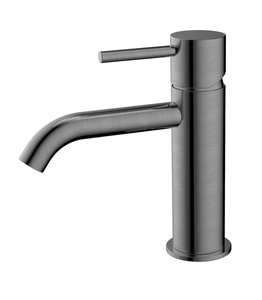
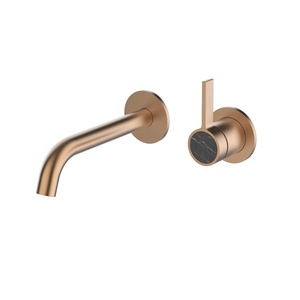
- PVD & Antibacterial Surface Finishes: Procurement teams are expanding beyond standard white ceramic into titanium PVD coated metallic accents (Brushed Gold, Gunmetal, Rose Gold) and high-gloss matte black vitreous china treated with self-cleaning silver-ion glaze.
2. Technological Development Trends (2026–2030 Architecture)
The convergence of consumer electronics and classical ceramics has redefined factory R&D pipelines. Modern OEM smart toilets are no longer static plumbing fixtures; they are sophisticated electro-mechanical appliances requiring rigorous thermal, hydraulic, and electrical isolation engineering.
Instant Thermostatic Heating
Eliminating stale water tanks, ceramic core heater modules heat cold inlet water to an exact 38°C in under 0.2 seconds while saving up to 45% electrical power.
UV-C & Electrolyzed Sterilization
Automated sterilization cycles electrolyze incoming water into hypochlorous acid (HOCl) while UV-C LEDs sterilize stainless steel spray nozzles after every use cycle.
Microwave RF Radar Sensing
Replacing legacy infrared sensors affected by dark lighting or glossy tiles, 24GHz microwave radar delivers precise multi-stage lid opening upon user approach.
Furthermore, technical breakthroughs in micro-bubble aerated cleansing introduce billions of microscopic air bubbles into the water stream. This creates a softer, more thorough washing experience while reducing water consumption per cycle by 30% compared to traditional smart bidet seats.
Technical Specification Matrix: Smart Toilet Platform Comparison
When selecting a factory platform for private label manufacturing, buyers must evaluate the underlying hardware platform generation:
| Performance Feature | Generation 1 (Tank Storage) | Generation 2 (Tankless Direct) | Generation 3 (Smart Hybrid Boost) |
|---|---|---|---|
| Heating Architecture | Thermal Tank (Storage) | Instant Ceramic Heating Core | Dual-Frequency Thermo-Coil |
| Min. Water Pressure | 0.15 MPa (Required) | 0.20 MPa (High Pressure) | 0.00 MPa (Zero Pressure Pump) |
| Flushing Mechanism | Siphon Jet (Gravity) | Solenoid Direct Flush | Direct Fluid Dynamic Jet + Pump |
| Nozzle Hygiene | Manual Clean / ABS Plastic | SS304 Self-Cleaning | SS316L + UV-C + HOCl Plasma |
| PCB Waterproofing | Conformal Coating | Silicone Gasket Sealed | Full Epoxy Resin Potting (IPX4/IPX7) |
| Compliance Standard | Basic CE | CE, cUPC, WaterMark | CE, cUPC, WaterMark, SASO, CB |
Enterprise Capabilities & OEM Manufacturing Rigor
Leveraging decades of ceramic excellence, world-class industrial facilities, and a legacy backed by industry leadership.
128-Meter Computerized Tunnel Kilns
Our state-of-the-art manufacturing facilities utilize automated tunnel kilns operating at continuous temperatures of 1280°C. This ensures complete vitrification of raw clay, achieving a water absorption rate under 0.2%—preventing odor retention, crazing, and structural micro-cracks over decades of use.
End-to-End Quality Assurance
Every smart toilet unit undergoes 100% pneumatic leak testing, high-voltage insulation dielectric checks (2500V), and 3-cycle actual water flushing inspection before automated robotic packaging. All sanitaryware products are backed by a industry-leading 10-Year Vitreous Warranty.
Custom OEM/ODM Engineering
Our in-house industrial design and tooling divisions support complete private-label customization: custom ceramic body shaping, custom silk-screen logos, localized remote control button layouts, specific power plug standards (NEMA, Schuko, BS, AS/NZS), and user manual localized translations.
Frequently Asked Questions (FAQ) for B2B Procurement
Expert answers to common engineering, logistics, custom prototyping, and compliance questions regarding wholesale smart toilet sourcing.
Q: What are the Minimum Order Quantities (MOQs) for OEM private label smart toilets?
Our standard MOQ for standard catalog models is 20 units (sample orders supported). For custom logo branding, localized carton art, and custom remote controls, the OEM MOQ is typically 100 units (or 1x20GP container mix). For full custom ceramic tooling development, the minimum batch is 500 units.
Q: How do your smart toilets handle fluctuating electrical voltages in different export markets?
Our electronic smart bidet engines feature wide-voltage power supply modules (SMPS) rated for 100V–240V AC at 50/60Hz. Circuit boards are protected by surge suppressors, dual thermal fuses, and grounding safety leakage switches (GFCI/RCD rated at 15mA response) to meet strict UL 1431 and EN 60335 electrical safety standards.
Q: What certifications do your sanitaryware and faucets carry for Western market import?
Our products are engineered to meet global compliance. Depending on the range, products hold CE (Europe), cUPC / ASME A112.19.2 (North America), WaterMark / WELS (Australia/New Zealand), SASO (Saudi Arabia), and ISO 9001:2015 quality management certification. Test reports can be provided during order negotiation.
Q: What is the factory lead time for a 40HQ container of intelligent smart toilets?
Standard production lead time for a full 40HQ container (approx. 220–280 smart toilets) is 25 to 35 calendar days from deposit confirmation and artwork approval. Repeat standard orders can be dispatched within 15–20 days via our strategic component safety-stock program.
Q: How do you ensure fragile ceramic and electronic smart toilets survive ocean transit?
Products are packaged in heavy-duty 5-ply honeycomb corrugated export cartons, enclosed in 360-degree molded expanded polyethylene (EPE) foam armor. Package designs undergo ISTA-1A drop testing (10 drop cycles from 76cm height) to guarantee zero ceramic cracking or internal electrical displacement during rough transit.
Q: What spare parts and after-sales support warranty terms do you provide for distributors?
We provide a 10-year warranty on ceramic vitreous china bodies and a 2-year full replacement warranty on electronic bidet assemblies (PCBA, heating cores, solenoid valves). For container orders, we include 1% to 2% complimentary fast-wear spare parts (remote controls, solenoid valves, sealing rings, water filters).
Q: Can your smart toilets function manually during a home electrical power outage?
Yes. All our smart toilet models feature built-in mechanical flush push-buttons or backup 9V battery slot connections. In the event of a power outage, users can clear the bowl with full siphon flushing power via manual mechanical override.
Q: What is the difference between brass and SUS304/316 stainless steel faucets in your product catalog?
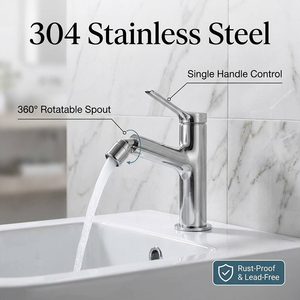
Our brass faucets utilize high-purity CW617N or HPb59-1 low-lead brass casing for classical luxury contours and durability. Our SUS304 and SUS316 stainless steel faucets are 100% lead-free, offer superior acid/alkali corrosion resistance, and feature brushed natural metal finishes without electroplating degradation.
Partner with China's Premier Smart Toilet Manufacturing Hub
Scale your brand with high-margin, factory-direct intelligent toilets and architectural bath fittings. Request full OEM/ODM specification catalogs, factory audit reports, or wholesale price quotes today.
Send an Inquiry